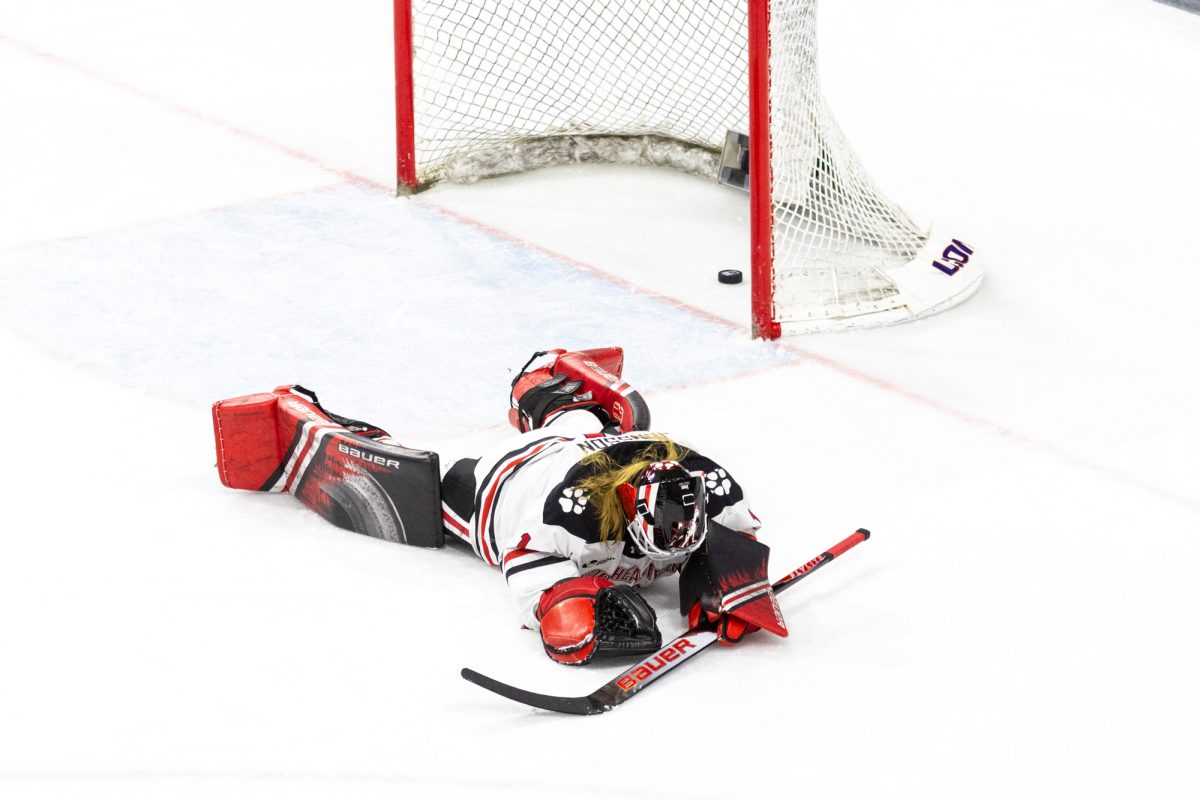
 AFTER THE DEFEAT / YOUTH HOCKEY
01 / THE FINAL HORN
Nobody wants to lose.
Nobody drives two hours to a hockey rink hoping to watch their child's team lose 7–3. Families make those trips because hockey matters to them. They invest in practices, lessons and early mornings because, when the puck drops, everyone wants a chance to win. A bad loss hurts precisely because so much effort went into trying to prevent it.
There's nothing wrong with wanting to win. A close game can give players an incredible sense of accomplishment, and a hard-fought victory can make weeks of practice feel worthwhile. Coaches are competitive, parents are invested, and children care about their results. None of that needs to be apologized for. We should be careful, though, not to confuse how much a game matters with how we are entitled to behave when it goes badly.
Imagine telling a seven-year-old goaltender who has just given up seven goals that the score doesn't matter and they played great. They know the result, and they may know perfectly well that they struggled. Empty praise can sound just as disconnected from their experience as a lecture about every goal. What they need is somebody who can acknowledge the disappointment without making them feel ashamed of it.
Losing is not the enemy of development. Every team gets outplayed eventually, sometimes badly, no matter how carefully it prepares. The deeper question is what the experience becomes after the final horn: an opportunity to understand the game and recover, or another reason for a child to fear disappointing the adults around them.
That's where our responsibility begins. We spend enormous amounts of time teaching young players to skate, shoot, defend and compete. We ought to think just as seriously about what we teach them in the hours after a game, when their equipment comes off and the result can no longer be changed.
ARE WE HELPING CHILDREN PROCESS DEFEAT, OR MAKING THEM EXPERIENCE IT TWICE?
02 / THE WALK OFF
The game ends. The feeling doesn't.
Watch what happens at a rink after a difficult loss. Parents drift into conversations about missed chances and defensive mistakes; coaches replay the shifts they wish they could have back. Everybody has a theory about what happened, often before the last player has left the ice. The people who actually played the game are still trying to work through it.
In the dressing room, a forward might be replaying a breakaway, a defenseman might be thinking about an assignment, and a goalie might be wondering whether every teammate is angry with them. From the stands we can see the scoreboard. We can't always see what a child is carrying when they sit down to take off their skates.
Not every player reacts the same way. Some cry or get quiet; others are frustrated enough to talk about every shift, while some seem ready to move on before they reach the parking lot. These are children learning how to handle difficult feelings, and their reactions don't necessarily tell us who cares the most.
The job of the adults around them isn't to erase the disappointment. It's to keep that disappointment in proportion. A child can be upset about an outcome, accept responsibility for a mistake and still walk away knowing they are respected. Those things belong together, especially after a bad night.
I think about the difference between a player leaving the rink disappointed in the result and a player leaving it afraid of the conversation waiting in the car. The first is part of sport. The second is something we have the power to change.
THE SAME GAME / TWO DIFFERENT MOMENTS
THE SCORE DOESN'T TELL THE WHOLE STORY.
One moment can mean excitement to one child and heartbreak to another. Both will remember what the adults do next.
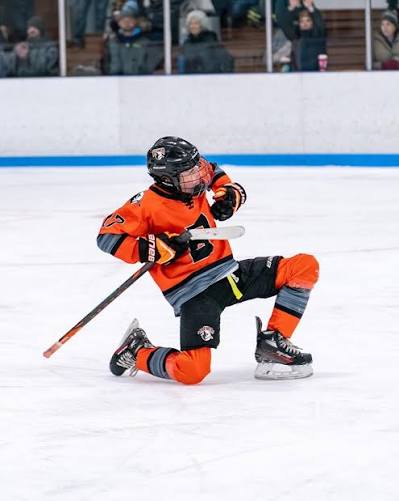
THE EMOTION OF THE GAME
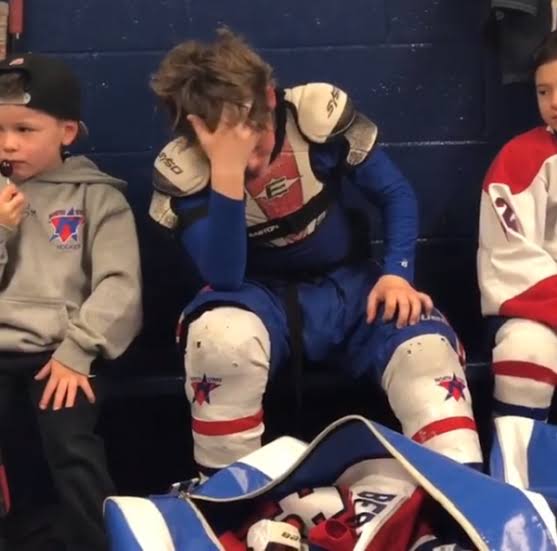
THE MOMENT AFTER
03 / THE PARENT'S ROLE
Honesty is not cruelty.
My seven-year-old son sometimes asks me to grade his performance after a game. He wants to know whether I would give him an A, an A-plus, a B-minus or a C. It's a simple question on its face, but every parent who has watched a child struggle knows how complicated the answer can become.
There are nights when I think he played incredibly well, and others when I know he has looked sharper in practice and in previous games. In my head I may have an honest assessment that he isn't going to enjoy hearing. Then I look at the person asking me. He's seven, tired, and looking to his father, not to a scout or a professional goalie evaluator.
Over time I've tried to resist the urge to deliver my full assessment immediately. I might tell him, 'You've had better games, buddy. There are a couple of things we can work on, but let's get something to eat and talk about it another time.' That isn't an attempt to convince him he played well. It's an attempt to choose a moment when the conversation can actually help him.
Most nights we get home and the game slips into the background. Once in a while, though, he remembers the grade the next day and asks what he could have done better. That's a very different conversation. Instead of defending himself while the loss is still raw, he's ready to ask questions about positioning, movement or decisions that he can improve.
I haven't found a perfect formula, and I'm sure I won't handle every game perfectly. But the experience keeps reminding me that honesty and urgency are different things. Just because I have an opinion about his performance doesn't mean I have to deliver it the moment he walks through the doors.
Children need truthful feedback. They also need to know that a poor outing does not change how we see them. 'You've had stronger games, and we'll work on this' leaves room for both accountability and confidence. 'You were terrible tonight' gives them very little except a reason to feel worse.
THE TRUTH DOES NOT BECOME LESS TRUTHFUL BECAUSE YOU WAIT.
04 / COACH WAPPS / INCREASE PERFORMANCE
The quiet ride.
That distinction is at the heart of a recent series of posts by Coach Wapps of Increase Performance. He works with goaltenders and families on the parts of the position that aren't always visible from the stands. One of his messages, 'The Quiet Ride,' captures something parents can lose sight of when a game doesn't go the way they expected.
His advice isn't complicated: when a child has had a hard game, they may need food, some music, or a little time without another adult dissecting the score. From the parent's perspective, those minutes can feel like the perfect opportunity to coach. From the child's perspective, it can feel like being made to sit through the same loss a second time.
Coach Wapps puts it in five memorable words: 'Snacks beat speeches. Every time.' It's a simple line, but it asks us to reconsider what help actually looks like while a young athlete is still upset.
Think about a player who missed the opportunity that might have changed the game. They've probably replayed that moment enough already. They cannot go back and shoot again, just as the goalie cannot go back and stop the puck. When the first twenty minutes of the ride home become a detailed list of mistakes, the adult may be satisfying their own frustration rather than helping the child prepare for another opportunity.
There's a place for film, technical corrections and difficult conversations. That place isn't necessarily the passenger seat five minutes after the final horn. Giving a child space does not lower the standard you expect from them; it makes it more likely they'll be able to hear you when you eventually talk.
If they want to tell you how the game felt, listen. If they'd rather hear music and eat something, let them. The goal isn't to avoid the truth. It's to make sure the ride home is still a place where your child feels safe enough to come to you with it.
A FRACTION OF A SECOND. A MOMENT THEY MAY CARRY HOME.
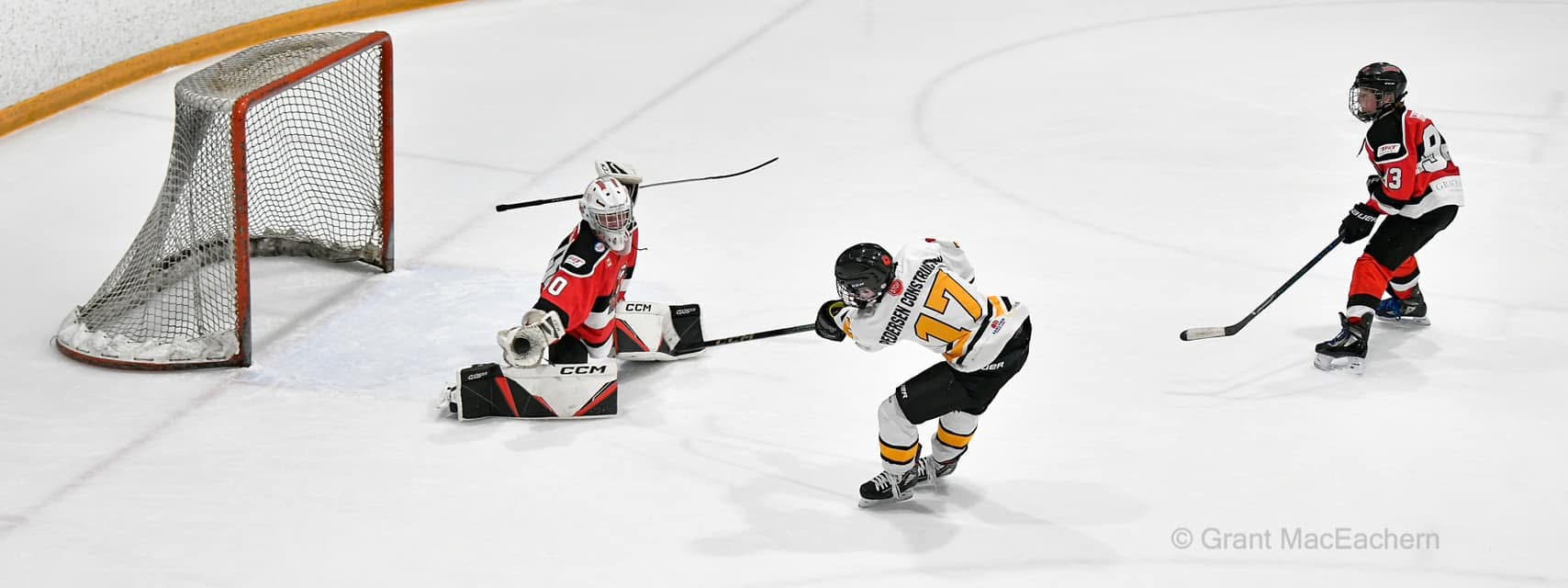
05 / THE GOALTENDER
Don't coach the crease.
That need for patience is especially clear in goaltending, a position where a mistake is impossible to hide. A forward can miss a chance and get another shift. A defenseman can get beaten and hope for help. When a puck slips past the goalie, the entire rink knows immediately, and the child inside the mask has to reset while everybody is still looking in their direction.
From the stands, a goal against can seem obvious. On the ice, the goaltender may have been screened, dealing with a deflection, reading a two-on-one or recovering from a breakdown that began several passes earlier. Some goals are genuinely preventable and some aren't. A parent who is certain they saw the whole story from behind the glass may be missing the most important parts.
None of this means we should make excuses every time a goalie struggles. There are nights when a young goaltender isn't sharp, when their positioning is off or their decisions are slow. Those things deserve attention because learning the position involves being able to recognize and correct mistakes. What they don't deserve is to become a verdict on the person playing it.
Consider the difference between asking, 'What did you see on that play?' and demanding, 'How could you possibly let that in?' The first question leaves room for an explanation, a coaching point and another attempt. The second assumes that a child owes an embarrassed adult an answer. Only one of those approaches is going to help the next save.
Coach Wapps' advice to parents is direct: 'Don't coach the crease.' Your child already has somebody responsible for teaching the technical details. The parent has another responsibility, one that can be harder during a rough game: be the person whose expression and support don't disappear when the puck crosses the goal line.
A goaltender needs resilience, but resilience isn't built by constantly reminding a child that they let everybody down. It's built through preparation, honest coaching, repeated chances to improve and the security of knowing they can have a bad game without losing the respect of the people closest to them.
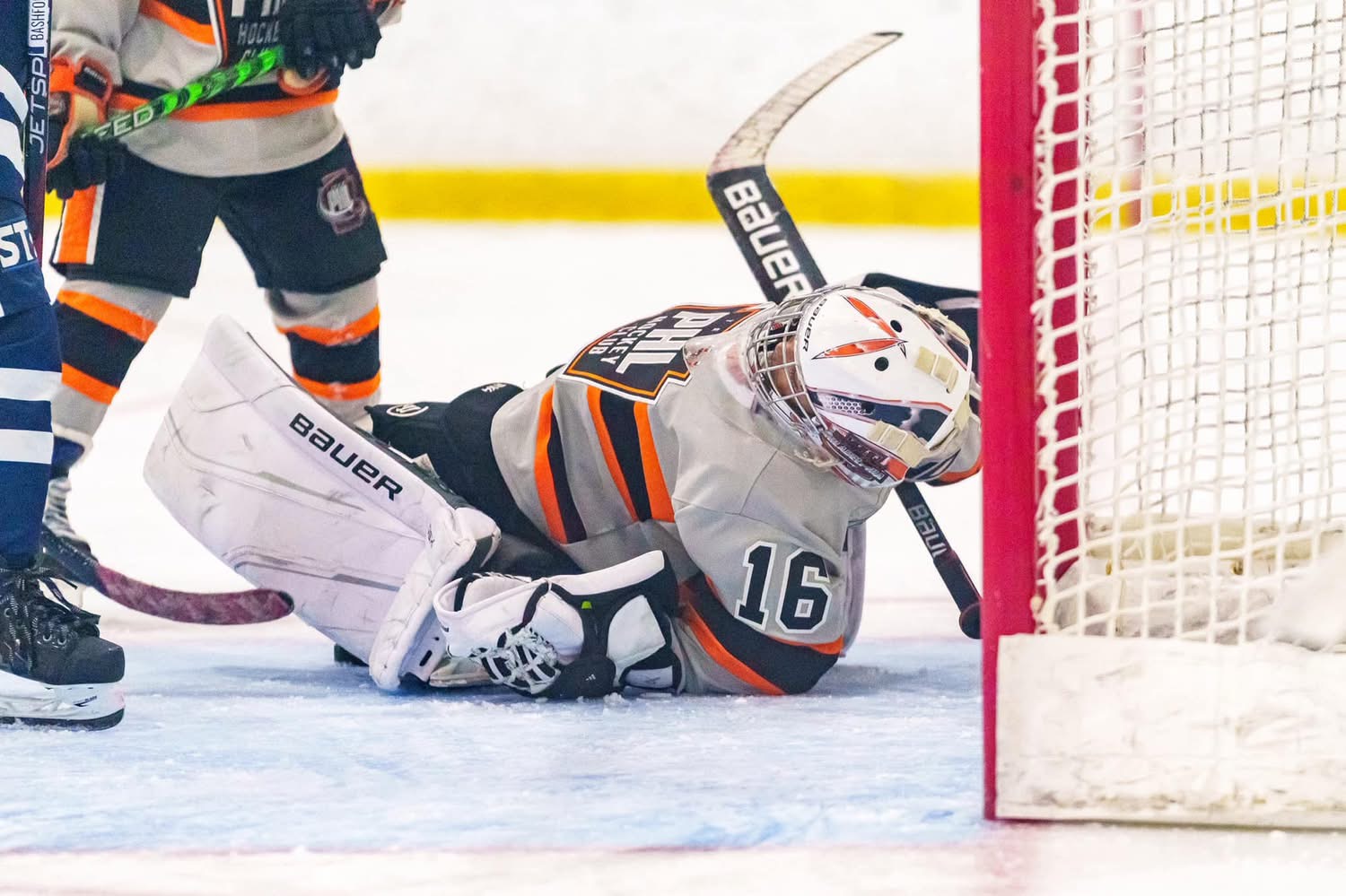
ONE SHOT.
ALL EYES.
The next save matters more than the last goal.
06 / NO SCAPEGOATS
We don't need a villain.
The same principle applies to the entire team, which is why I struggle with the speed at which adults look for somebody to blame after a loss. Hockey is a team sport for every minute of a victory. It should not suddenly become a search for an individual culprit when the other side wins.
A team might spend long stretches unable to enter the offensive zone. Defensive coverage might break down repeatedly. The goalie might have a difficult outing, or the opponent might simply move the puck better and earn more opportunities. Sometimes several of those things happen in the same game. A score can tell you who won; it rarely explains everything that led there.
Of course we should ask what went wrong. That's how teams improve. But the point of reviewing a loss should be to understand decisions and habits, not to select one child as the person who has to carry everybody's disappointment home.
Accountability is useful when it identifies something the athlete can control. Were they prepared? Did they follow the system? Were they in position? Could they make a different read next time? Blame is different. It often expresses an adult's anger without giving the player any way to improve.
A coach who says, 'You were late recognizing the backdoor option; we'll work on that in practice,' has given a player something concrete. A coach who says, 'You cost us the game,' has offered nothing but shame. The standard can remain high in both situations, but only the first conversation has a productive purpose.
We ought to be teaching children that acknowledging a mistake is a sign of maturity, not an invitation to be embarrassed. If young players are terrified of admitting they struggled, we shouldn't be surprised when they start making excuses or blaming teammates instead.
HOW WE SPEAK AFTER A LOSS / A QUICK COMPARISON
SAME GAME. DIFFERENT LESSON.
WHEN WE BLAME
“Whose fault was it?”
A player leaves with the weight of a result they cannot change.
WHEN WE HOLD THEM ACCOUNTABLE
“What can we work on?”
A player leaves with a clear next step and a chance to improve.
Accountability asks for growth. Blame asks for a target.
07 / COACHES
Your anger is not instruction.
I have enormous respect for coaches who take youth development seriously. They spend time preparing practices, managing different personalities, teaching complicated skills and trying to help children compete at a level that challenges them. A good coach understands that the job is as much about communication and judgment as it is about hockey knowledge.
That's also why poor coaching deserves to be called out clearly. There are adults who confuse yelling with leadership and humiliation with accountability. They believe that if a child is embarrassed enough in front of teammates, the lesson will somehow sink in. Whatever the intended message, that kind of behavior has no place in youth hockey.
A coach can demand effort, bench a player for ignoring an assignment and have a difficult conversation about preparation without attacking the player's character. The child should understand what the expectation was, how they fell short and what improvement looks like. Being cruel doesn't make the lesson more serious; it makes the person delivering it less effective.
I also understand that coaches hate losing. Their decisions are tested, their preparation is exposed and parents often second-guess them as soon as the game ends. But the pressure adults feel is theirs to manage. It cannot become a license to berate a ten-year-old in a dressing room because the coach is embarrassed by a score.
Organizations have to draw a meaningful line here. Repeated verbal intimidation, personal insults and public humiliation should lead to intervention and consequences, even when the coach has a winning record. Players are expected to meet standards of conduct; the people in charge of them should be held to at least the same standard.
Competitive hockey needs demanding coaches, not frightened children. If an adult cannot regulate their own emotions after a youth hockey defeat, they have no business teaching players how to handle adversity. The way a coach responds to losing is itself part of the lesson.
YOUR ANGER IS NOT INSTRUCTION.
08 / PARENTS
Don't become the second defeat.
Parents have to accept that this applies to us as well. We've all seen somebody lose control at a youth hockey game: screaming at officials, criticizing another family's child, pounding the glass or confronting a coach because they dislike how the game unfolded. That isn't the sort of behavior we would accept from our own kids, yet adults sometimes defend it as passion.
It isn't passion. Paying tuition, buying equipment and spending weekends at rinks are real sacrifices, but none of those sacrifices entitles somebody to verbally abuse a child. You can disagree with a coaching decision, question how an organization operates or be furious about a missed call without turning a hockey game into a spectacle.
What strikes me is how quickly one parent can change the atmosphere for an entire group. Teammates notice when an adult singles them out. Other families begin wondering who will be criticized next. Most importantly, the child belonging to that parent has to walk back into the dressing room knowing everybody heard what happened.
We also need to stop living through our children as though their results might settle something from our own playing days. Maybe we dreamed of a career in hockey that never happened. Maybe we believe the investment we're making now should guarantee a particular level of success. Neither gives us ownership of our child's ambitions or permission to take our disappointment out on them.
That doesn't mean parents should be indifferent. Be proud of the work your child puts in. Celebrate the wins and offer honest feedback when they ask for it. But remember that your relationship with them has to be bigger than the position they play, the line they skate on or the score they helped produce.
When a parent repeatedly harasses coaches, officials, teammates or their own child, hockey organizations should address it as a conduct problem rather than an unfortunate side effect of competitive sports. A warning may be appropriate in some circumstances; repeated or serious behavior demands stronger consequences. The same rules of respect should apply whether a family is new to the program or has been there for years.
There is no championship, ranking or scholarship opportunity valuable enough to justify deliberately humiliating a child. If we want children to learn sportsmanship, we need to show them what it looks like when the adults are the ones who are disappointed.
NO TROPHY IS WORTH HUMILIATING A CHILD.
09 / THE REASON WE PLAY
Protect the fun. Not the fantasy.
At this point someone usually asks whether we're making competitive hockey too soft. I don't think so. Protecting the fun has never meant pretending everybody played well, handing out compliments that weren't earned or teaching children not to care about the result. You can love the game, work incredibly hard and still be furious about losing.
The difference is whether the pursuit of winning makes a child more committed to hockey or gradually teaches them to be afraid of mistakes. Those are not the same kind of motivation. A player who wants the puck in a difficult moment is in a very different position from one who hopes it never comes their way because they can't bear the reaction if they make a mistake.
Coach Wapps makes this point in his message about protecting the fun. The goaltenders who are still enjoying the position at sixteen didn't get there through one great speech. Their relationship with the game was shaped by countless smaller moments, including how the people closest to them behaved when things didn't go as planned.
It's worth remembering, too, how few children will make professional hockey their career. They should be encouraged to chase ambitious goals, especially when they're willing to do the work. But adults need to keep that possibility in perspective instead of using it to justify endless pressure and unrealistic expectations.
The vast majority of young players will eventually spend their time on something other than competitive hockey. What they take with them could still be extraordinary: discipline, friendships, the ability to accept feedback and the confidence to try again after getting something wrong. We shouldn't sacrifice those benefits in pursuit of a destination most children will never reach.
When a child gets beaten badly on Saturday and still wants to put their skates on Sunday, that says something worth paying attention to. It doesn't mean the loss felt good or that they don't want to improve. It means disappointment hasn't taken away the part of the game they love.
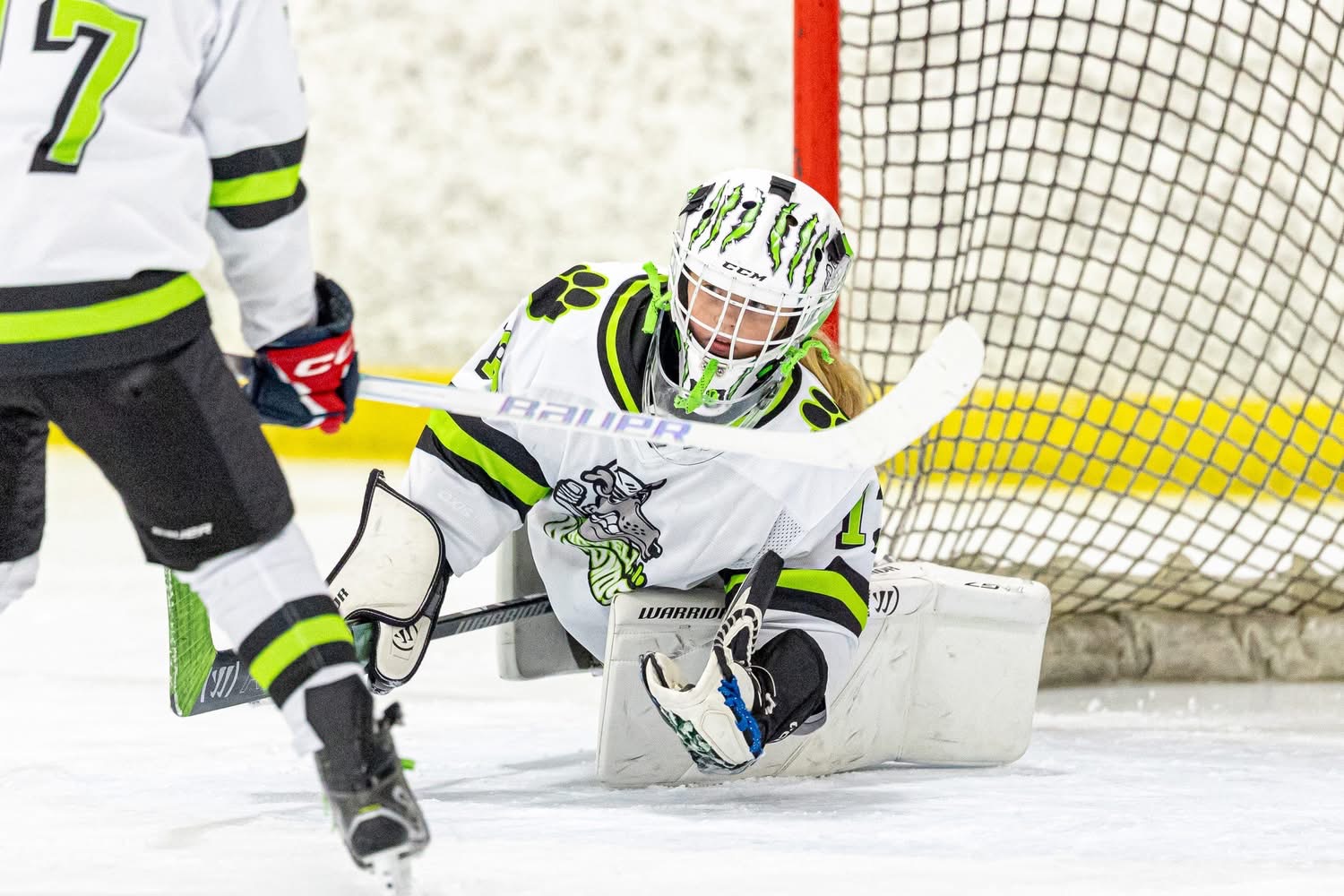
10 / WHEN THEY ARE READY
Let them talk first.
None of this means the difficult conversation should never happen. A few hours later, or perhaps the following morning, the child may be ready to make sense of the game. By then the immediate disappointment has settled and they have a better chance of separating what happened on the ice from how they feel about themselves.
I'd begin by asking whether they want to talk at all. If the answer is no, that doesn't automatically mean they're avoiding responsibility. It may simply mean they need more time. If they do want to talk, let them describe the game from their perspective before offering the view from the stands.
Questions like 'What felt hardest out there?' or 'Was there a play you'd handle differently?' tend to open a more useful conversation than immediately listing everything that went wrong. You may discover that the child saw something you missed or that a coach had already addressed the situation.
Once the player has spoken, be honest and specific. Maybe their positioning needs work, their effort wasn't where it should be or they made the same decision too many times. Give them a manageable next step instead of an exhaustive evaluation of every shift. The goal is to leave them with something they can do, not a collection of reasons to feel inadequate.
Sometimes that next step is a drill at practice or a conversation with their coach. Other times it's getting some rest and approaching the next game with a clear head. Youth hockey seasons are long, and development rarely moves in a straight line from one result to the next.
One team won and the other lost. There will be another chance to compete. Our responsibility is to help young athletes learn from that reality without turning every ordinary defeat into a crisis.
11 / AFTER THE DEFEAT
They remember the rides.
I know how much it means to watch your child have a great game. I feel it, too. I love seeing my son make a difficult save, enjoy a victory and come off the ice proud of what he's done. And when he struggles, I'd be pretending if I said I never feel disappointed.
The responsibility I keep coming back to is making sure my disappointment doesn't become his burden. I want him to prepare, work hard, accept coaching and recognize when he could have played better. None of that should require him to wonder whether I'm still proud to be his father after the game.
I think that's the distinction every parent and coach has to make for themselves. We can ask children to take the game seriously without making them feel that our approval is something they have to earn on the scoreboard. We can be honest about losing while refusing to turn it into humiliation.
One day the schedules will change. Our children won't need a ride to every practice or help getting their bags out of the car. Many of the games that felt enormous to us at the time will be forgotten, scores and all.
What may remain is how those years felt. Did they have someone they could talk to when they struggled? Were they allowed to be disappointed without being mocked? Did the adults around them help them become more accountable, or merely teach them to be afraid of criticism?
Winning is worth pursuing. Losing is worth learning from. But if we do this correctly, the thing our children carry forward won't be a record of every game they won or lost. It will be a healthier understanding of competition and the confidence to face difficult moments without losing themselves in the result.
So after the next defeat, before the analysis and before the speech, look at the child walking out of the rink. They don't need a different parent because the score changed. They need the one who brought them there.
ACKNOWLEDGMENTS / SOURCES
For the love of the game.
Original coaching messages and four-slide series by Coach Wapps (Daniel Wapple), Increase Performance ↗. The original images are not reproduced here; these are credited excerpts of his coaching advice.
Further reading: Minnesota Hockey: Three Tips for Goalie Parents ↗ and Association for Applied Sport Psychology: Postgame Communication ↗.
FEATURE 005 / AFTER THE DEFEAT / OCTOBER 2026