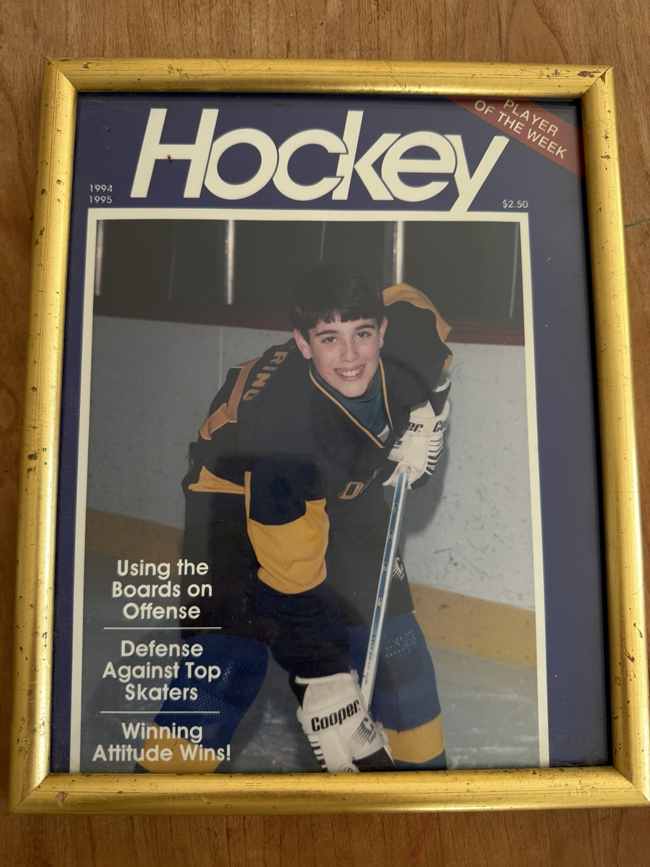
1994 / 1995
The smell of a rink stays with you.
I grew up playing hockey, which meant spending a remarkable amount of childhood moving from one rink to another. Winter, fall, spring, weekends, school nights, early mornings. Hockey was not simply an activity. It became part of the rhythm of life.
There are details from childhood that disappear almost completely, and then there are the ones that remain strangely vivid. For me, one of those memories is the smell of hockey gear. Even now, at 43, I can sit down in a rink with my kids, start tying skates, catch that familiar smell in the air and be transported back three decades. It is difficult to explain unless you grew up around the game. Smell has a way of storing memory more efficiently than photographs sometimes do.
That is where this story begins, long before Hockey Detox had a name.
Life moved on
Then hockey found its way back into my family.
I played for a long time, but adulthood gradually pushed hockey toward the edges of my life. Work became more demanding. I had children. Priorities changed. The game was still part of who I was, but it was no longer part of every day.
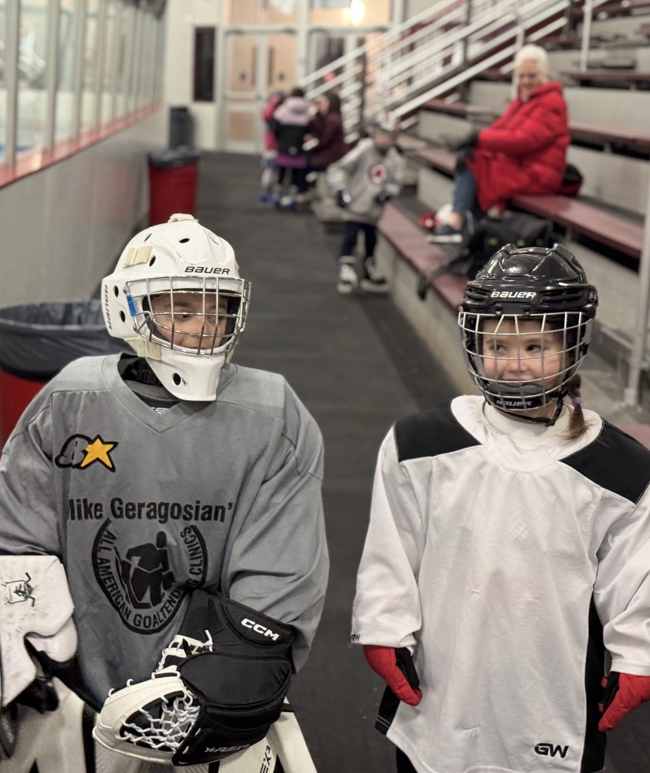
Then my kids became curious about skating. With my son, the connection was immediate. Something clicked for him in a way that felt familiar to me. He loved the rink, loved the equipment and eventually loved the position that guarantees a family will own more gear than it ever imagined possible.
Before long, hockey had taken over our family again. The difference was that I was no longer the kid being driven to the rink. I was the parent loading the car, finding missing gloves, tying skates and reorganizing weekends around ice times. My daughter was skating too, so the rink became one of the places where our family naturally gathered.
In many ways, Hockey Detox starts there. My kids brought me back to a part of my life that I had never really lost, even if I had stopped paying attention to it.
2020 / 2021
Before Hockey Detox, my working world was cars.
Long before I ever restrung a goalie glove for someone else, I spent years in automotive detailing. I owned a premium detailing company and built my reputation around work that demanded precision. Some of the cars were ordinary. Some were extraordinary. The standard was the same. If something was going back to a customer, I wanted the result to be right.
Detailing taught me much more than how to make paint shine. It taught me to understand materials, to respect preparation and to recognize how often the difference between average work and exceptional work is hidden in steps the customer never sees. Leather behaves differently from glass. Paint responds differently from trim. Cleaning, correction and protection are related, but they are not the same thing.
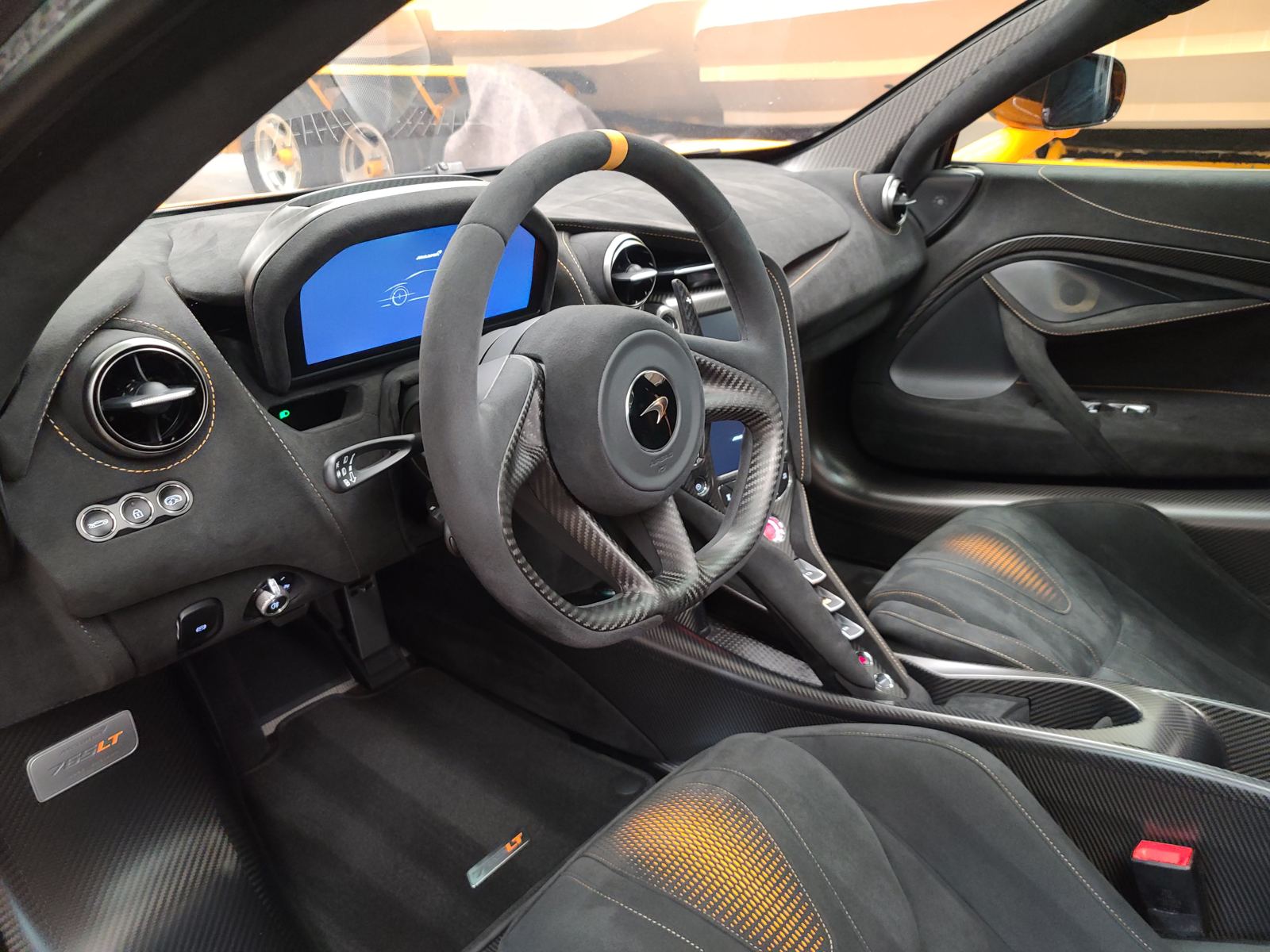
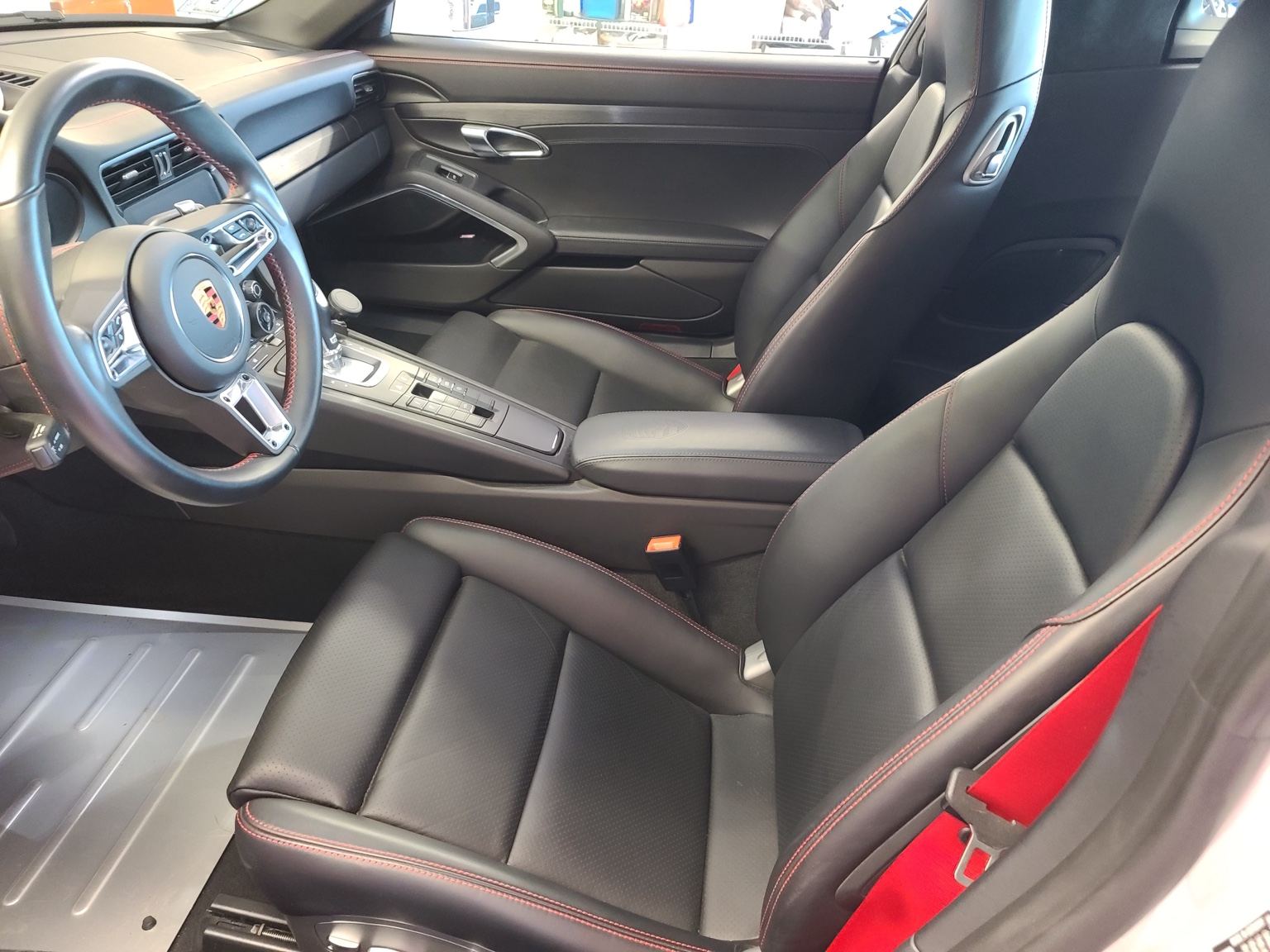
It also taught me how difficult odor can be. We occasionally dealt with vehicles carrying cigarette smoke, mildew or other persistent smells that remained even after a thorough physical cleaning. Ozone was one of the tools we used after cleaning to help address what remained.
At the time, none of that seemed connected to hockey.
Back at home
The problem was sitting inside a hockey bag.
My wife and I are both particular about keeping our home clean. Wet gear sitting in a closed bag was never going to survive long in our house without becoming a project. We dried everything. We aired it out. We cleaned it more aggressively than most families probably would.
Eventually I found myself thinking about the automotive work I used to do. I knew what ozone could accomplish in the right context, and I wondered whether the same principle could be useful with hockey equipment.
There was no business plan behind the thought. I was not trying to invent a company. I was trying to solve a very ordinary family problem. I wanted my son's gear to stop making the entire room smell like a locker room.
The garage
The first version of Hockey Detox was a tent and an ozone machine.
My first attempt was simple. I put an ozone generator near the gear in the garage. It helped, but the result was inconsistent because the treatment was dispersing through a much larger space. I kept experimenting and eventually bought a small tent. I placed the equipment and the generator inside so the treatment could remain concentrated around the gear instead of immediately spreading through the garage.
The machine was a QT Cyclone rated for spaces up to 6,000 square feet. Looking back at the photographs now, the setup is almost comically simple. A tent sat on a table. Goalie gear rested inside. The machine sat next to it with a cord running out of the opening.
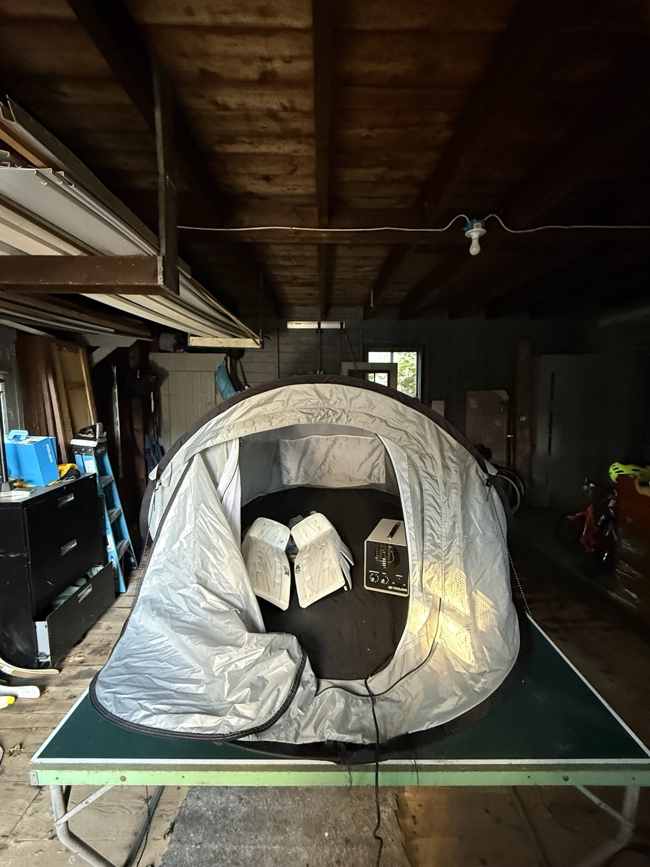
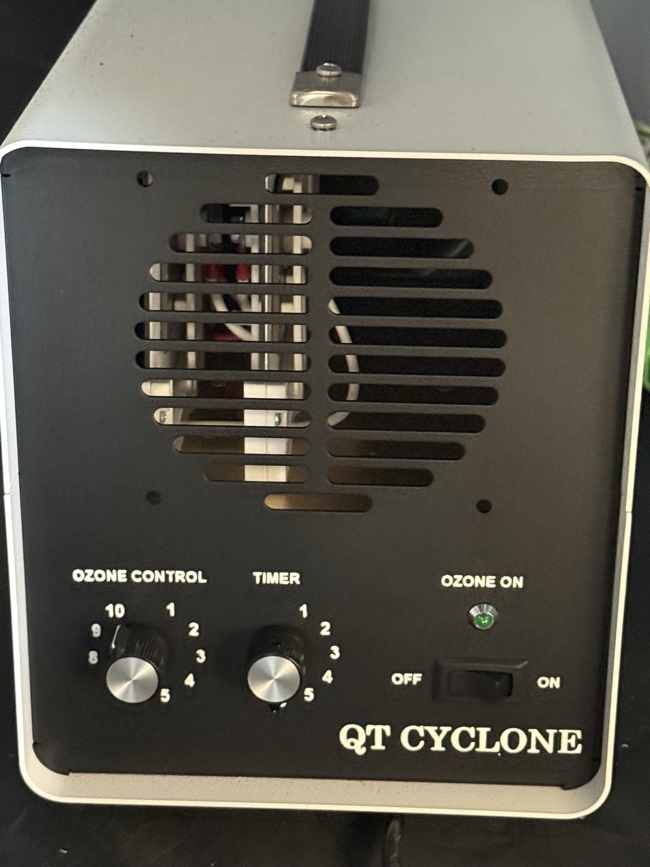
It was not elegant, but it was the first time the idea felt repeatable. I could take my son's equipment after hockey, treat it, dry it properly and return it to a condition that made living with the gear substantially easier.
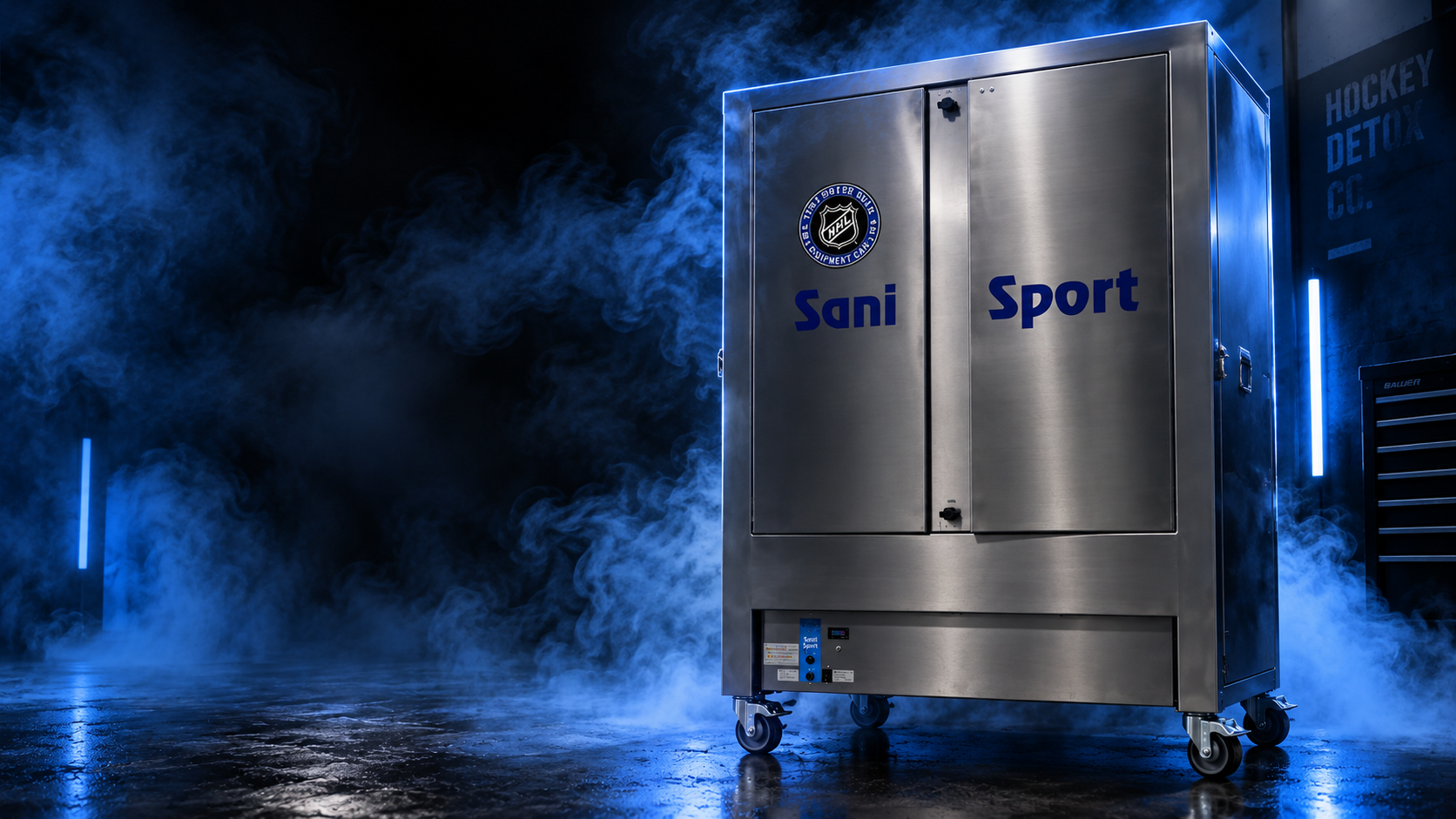
That small experiment eventually led me toward commercial equipment and a Sani Sport system. More important than the equipment itself, though, was the realization that something I had learned in a completely different industry could be adapted to solve a problem in hockey.
The next problem
Then my son asked me to help with his glove.
The cleaning side of the business was developing, but the moment that changed the direction of Hockey Detox came from a much smaller problem. My son's goalie glove would not close the way he wanted it to, and he asked if I could help break it in.
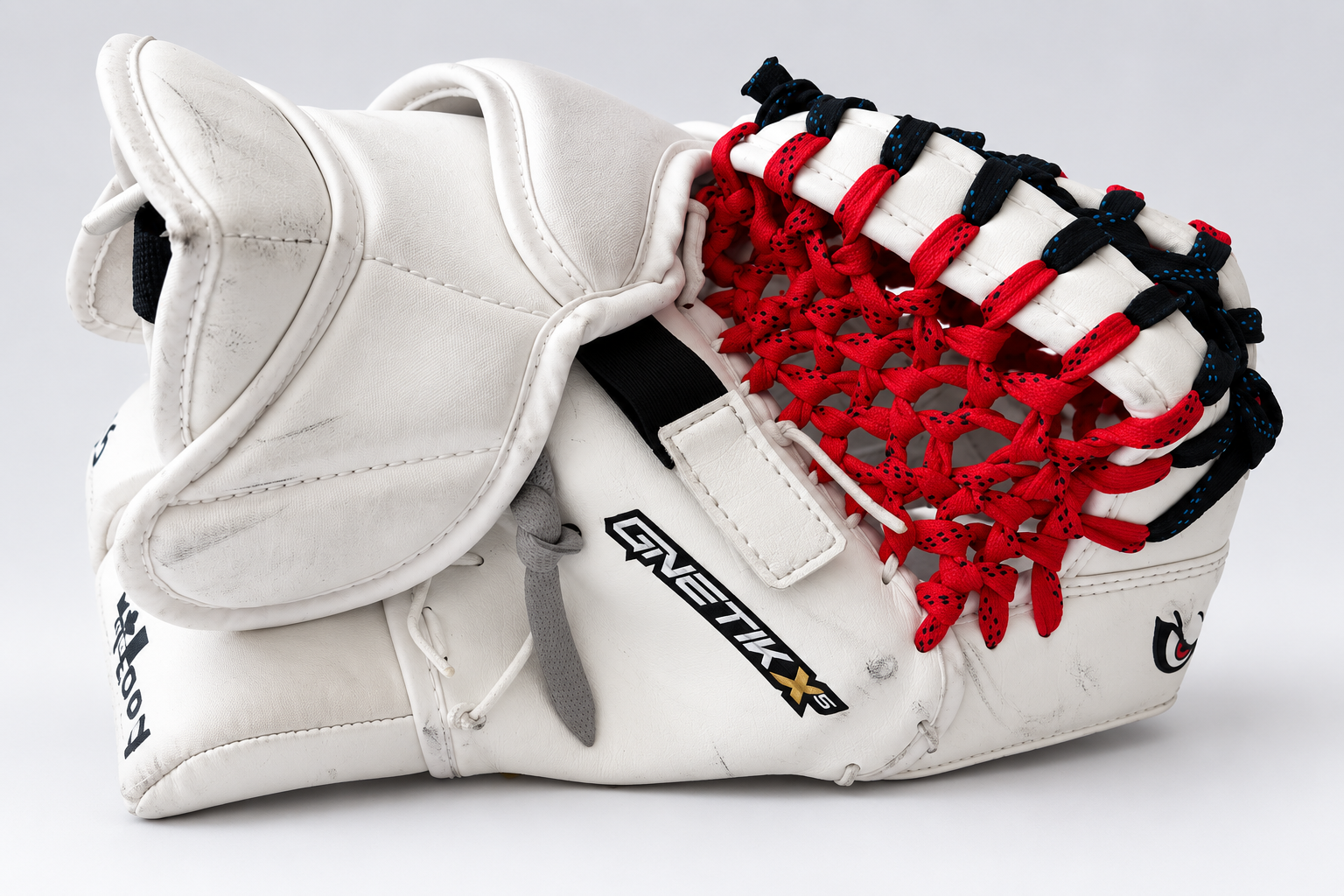
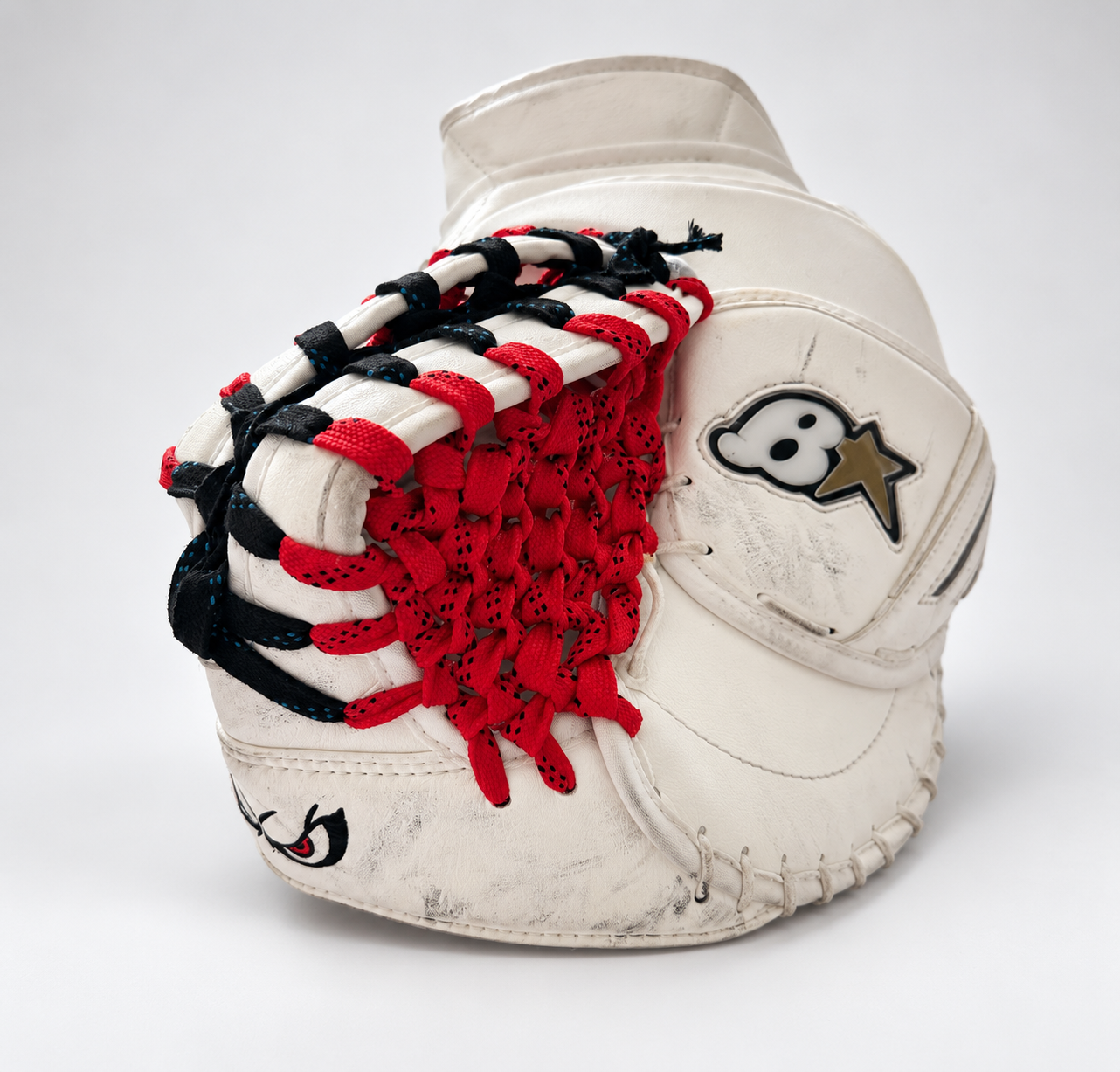
I started with the break. Then I began looking at the lacing. Once I understood how the glove was constructed, I wanted to know how changing tension, pocket shape and lace choices would affect the way it felt. A basic restring became another. Traditional lace turned into hockey lace. Then came different pocket configurations, floating T setups, deeper rebuilds and the endless small adjustments that goalies notice immediately even when everyone else would miss them.
I fell into that work in the same way I had fallen into detailing years earlier. I wanted to understand why something worked, not simply copy what someone else had done.
What followed me from detailing
I kept bringing the automotive mindset into hockey.
The more I worked on goalie equipment, the more I recognized problems that felt familiar. Ceramic protection was a good example. In automotive detailing, ceramic coatings are used to create a protective surface that can make water and grime easier to manage. I had years of experience thinking about protection in those terms, so I began asking whether similar technology could be adapted responsibly to compatible hockey equipment.
That question became the foundation for the ceramic protection side of Hockey Detox. The purpose was practical. Goalie equipment is expensive, constantly exposed to water and ice grime, and difficult to keep looking clean. If a protective treatment could make routine maintenance easier and reduce how aggressively surface contamination adhered to compatible materials, then it had value.
That became a pattern for the company. Find a real problem. Look carefully at what I already know. Test the idea. Refine it. Keep it only if it improves the experience for the person using the equipment.
Building the business
I learned that permission was not a requirement.
Growth has not happened in a straight line. Hockey Detox still does not have formal relationships with every goalie equipment manufacturer, and I understand why. Large brands already have established dealer networks and may not see an immediate reason to make room for a small specialty operation.
Over time, I stopped treating that as a limitation. If I need to source a glove through the same legitimate retail market available to everyone else, I can do that. If a retailer is offering a sale or a rewards program, I can use it. My business does not depend on inflating the price of a stock glove. The value comes from the work that happens after I receive it.
The break in, the restring, the pocket, the floating T, the protection, the attention to how a particular goalie wants the glove to feel. That is the part I can control, and it is the part that has become the identity of the business.
The part I did not expect
The best moments are usually the smallest ones.
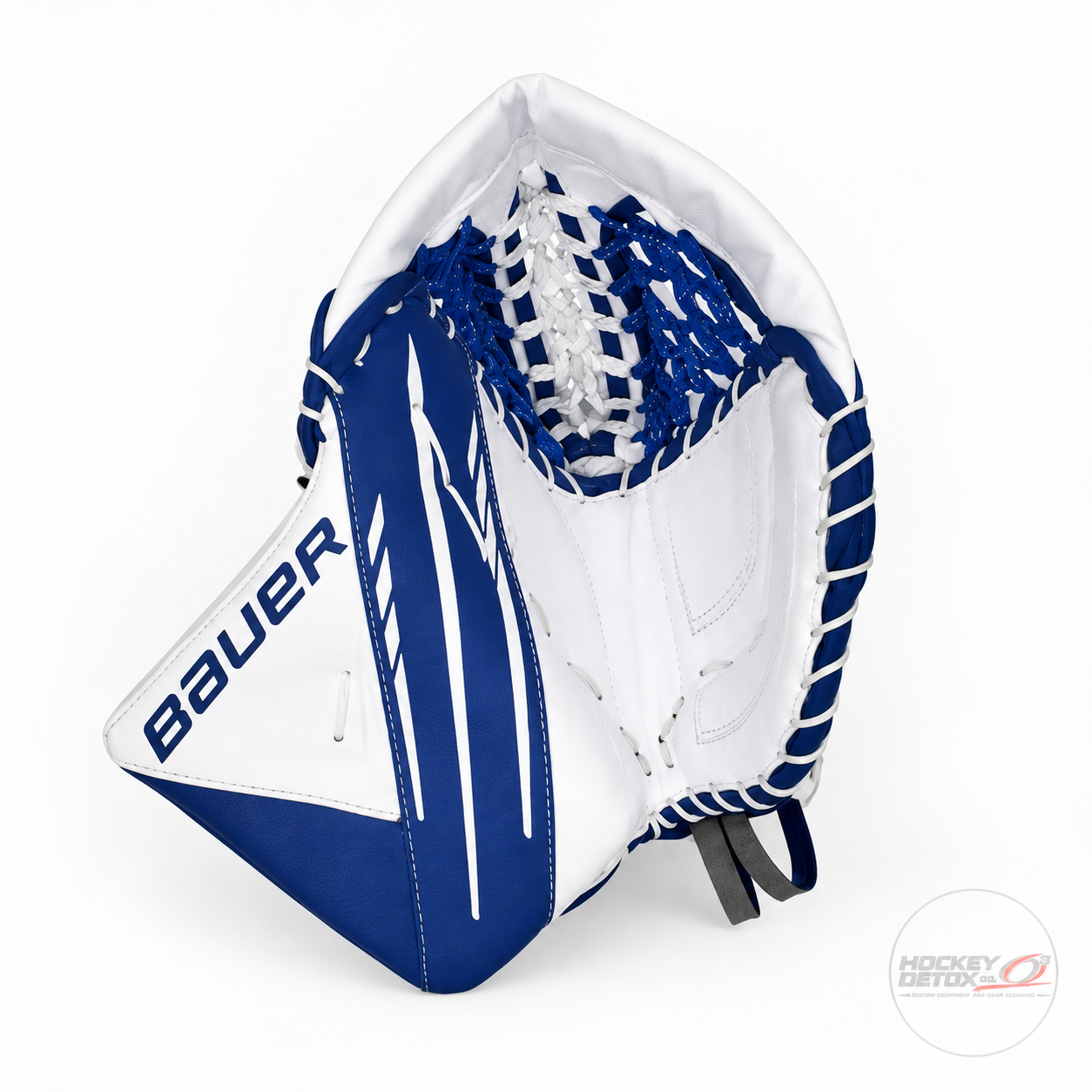
Recently I delivered a glove to a nine year old goalie named Ryan. He had never had a glove customized for him. He had never had a floating T or anything that felt especially personal. When he put the glove on, he smiled immediately.
That reaction stayed with me. I did not manufacture the glove from raw materials, and I would never pretend that I did. What I did was take a standard piece of equipment and help make it feel like his.
Hockey is an expensive sport. Truly custom equipment can become inaccessible very quickly for many families. If Hockey Detox can give a young goalie some of that experience at a more reasonable point of entry, then the work has value beyond the transaction.
Today
I thought I was solving a smell.
When I look back now, that is the part of the story that makes me smile. I thought I was solving a hockey bag problem. In reality, I was reconnecting several parts of my life that had never seemed related.
More than thirty years of hockey memories, years spent obsessing over automotive detailing, a tent in my garage, a goalie glove my son could not close, and a family that somehow became consumed by the rink all found their way into the same place.
That place became Hockey Detox.
Hockey makes my son happy. Skating gives our family something we share. Our weekends are filled with games, practices, long drives, cold buildings and the ordinary chaos that comes with supporting your kids. Somewhere along the way, this business became part of that family rhythm too.
I get to work around a sport that gave me an enormous amount when I was young. I get to solve problems with my hands. I get to take something that is frustrating, dirty, stiff or unfinished and make it better. Every so often, I get to hand a kid a glove and watch his expression change.
I do not know exactly what Hockey Detox will look like ten years from now, and I am comfortable with that. I know what I want the standard to be. I want the work to be thoughtful. I want the customer to understand the value. I want the finished result to be right.
Most of all, I know where the credit belongs for bringing me back to the rink. My kids did that. Without them, Hockey Detox probably never exists.