WHERE THIS REALLY STARTED
I was trying to get the smell out of my son's gear.
When I started Hockey Detox, I was not trying to build a goalie equipment company. I was trying to solve a problem in my own house. My son's gear was wet, nasty, and smelled like hockey gear always seems to smell. I knew ozone from my automotive detailing background, so I started experimenting with it and Hockey Detox grew from there.
We have talked about that beginning before. What has changed recently is the direction of the company. More and more of my time is now focused on goalies: glove break-ins, restringing, repairs, ceramic protection, and the little details that can make expensive equipment easier to use and easier to live with.
That shift was not planned. I followed the people who kept showing up.
WHY GOALIES?
Because roughly 80 percent of my early customers were goalie families.
It was parents with eight, nine, ten, thirteen, and fifteen year old goalies. The gear was always wet. It was always in the car. The bag smelled. The car smelled. Sometimes they would ask if I could ozone the car too because the goalie bag had basically taken over the vehicle.
Then the questions started changing.
People knew my son Teddy was a goalie. They would ask who did his gloves, why his pads always looked clean, why he always seemed to have great gear, and what I was doing differently.
The answer was not some secret program. I was just taking care of my kid.
TEDDY
My seven year old changed the direction of the business.
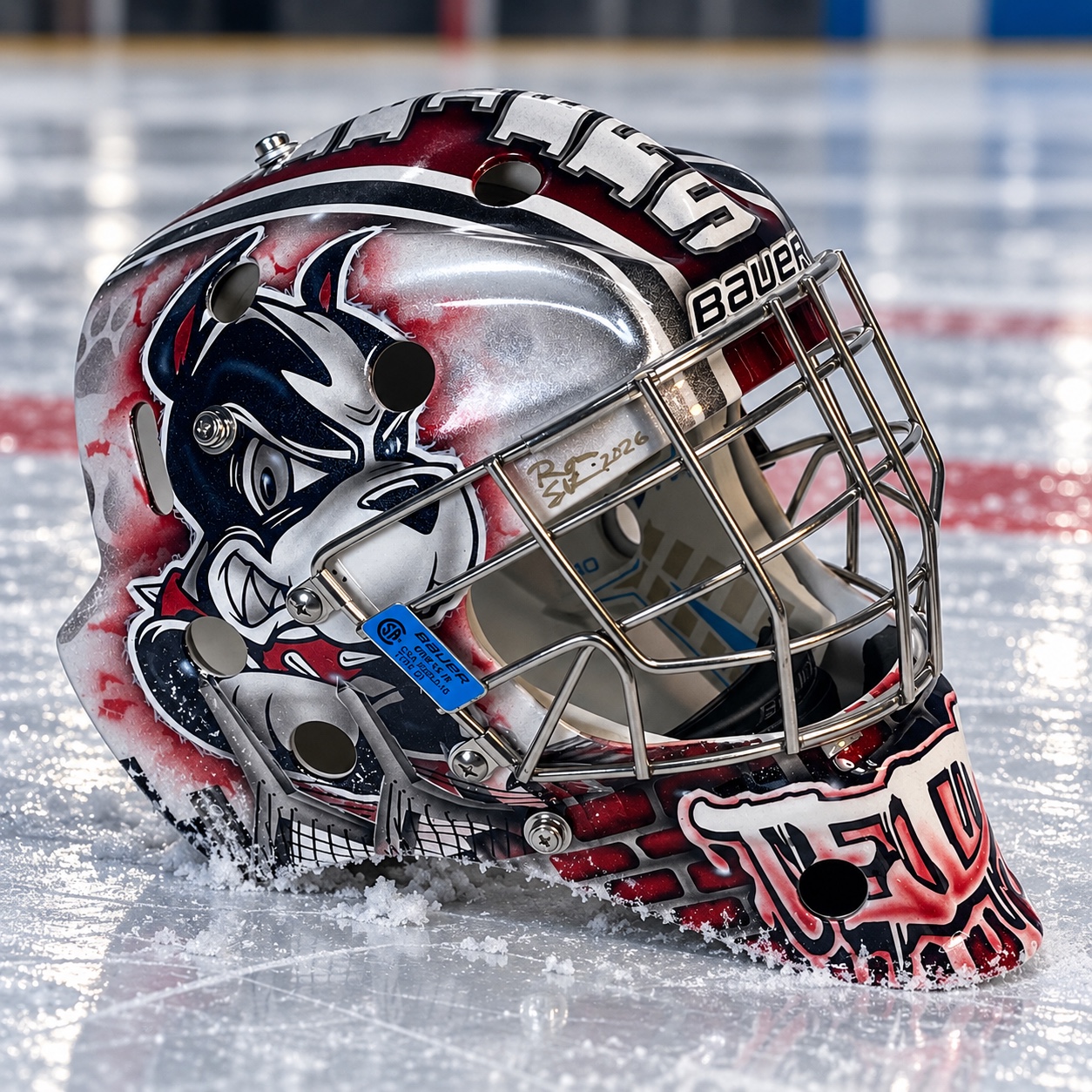
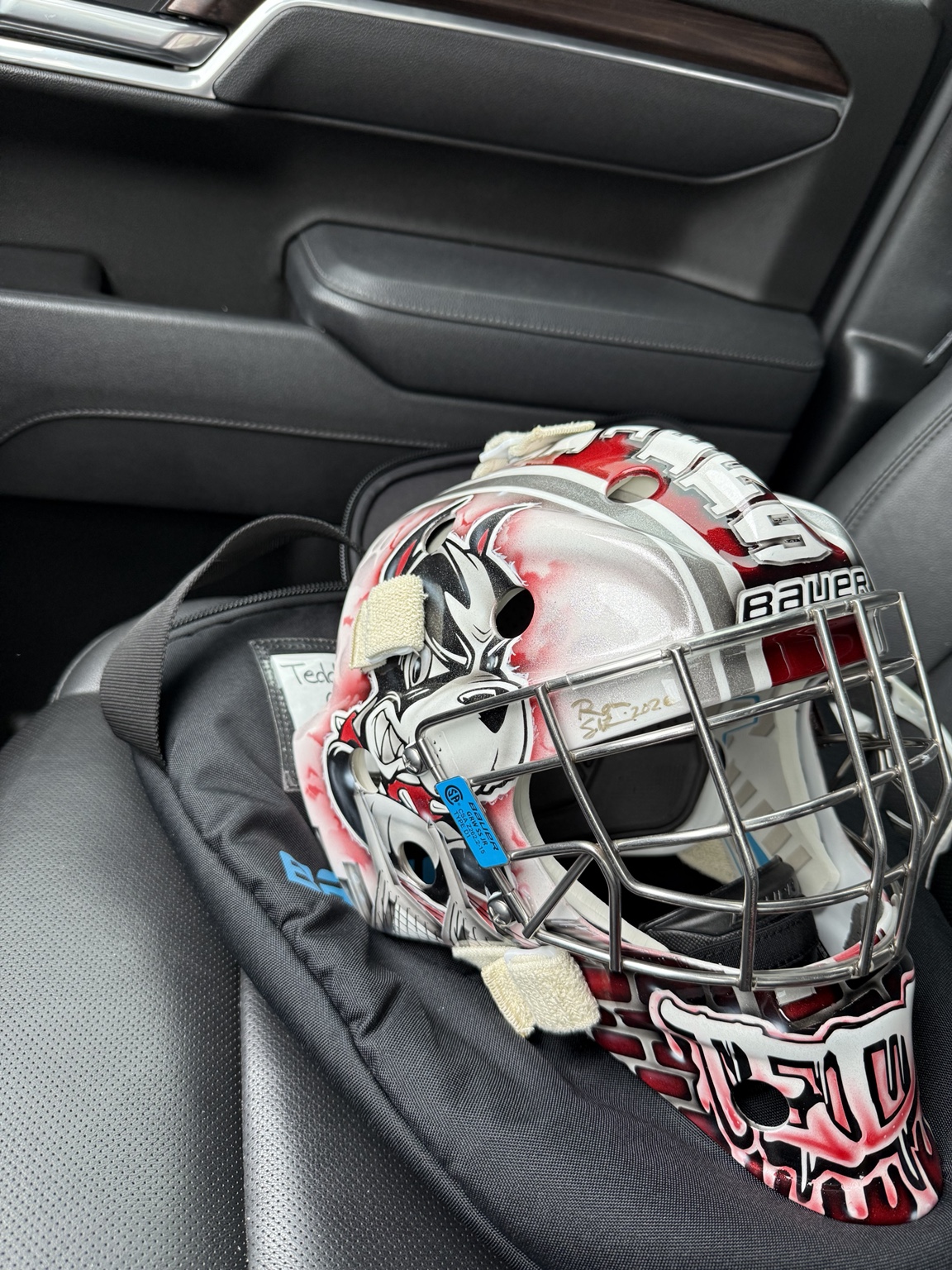
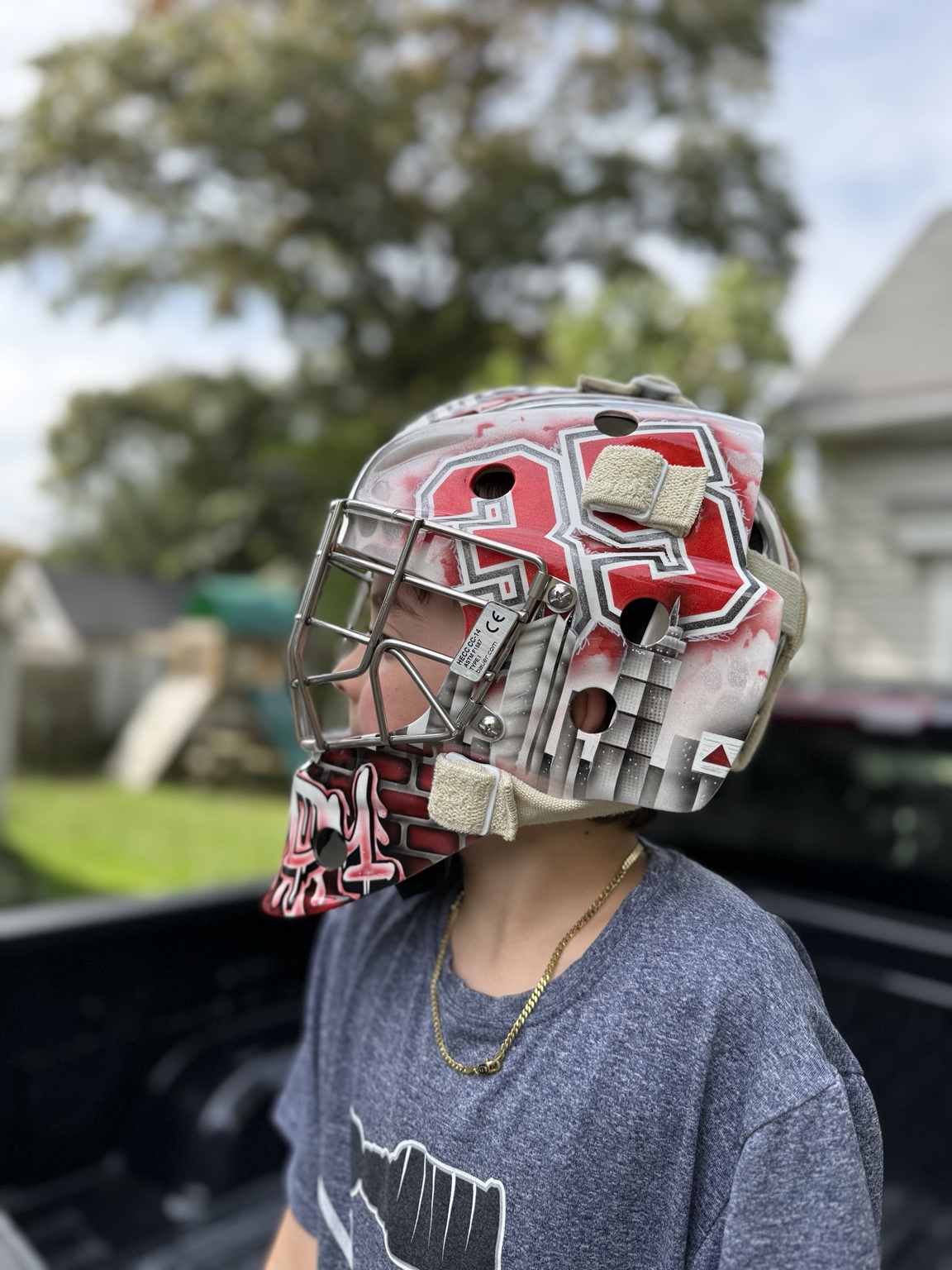
Teddy is seven. He plays in the Eastern Hockey Federation on Platinum and Elite teams, and between summer hockey, camps, practices, and games he is on the ice somewhere around 300 days a year.
Youth hockey asks a lot from kids. I wanted his equipment to work properly. I wanted it to protect him. I wanted it to last. Most of all, I wanted him worrying about stopping the puck instead of fighting his equipment.
Teddy is this little monster with a huge personality. He is always smiling, always happy, and he loves being at the rink.
Then he came to me with a simple problem: “Dad, I can't squeeze my glove.”
He was seven years old. Why should a seven year old goalie have to fight his glove every time he wants to catch a puck?
SO I TOOK ONE APART
I wanted to understand the glove, not just force it closed.
I started the same way a lot of people learn something now. I watched videos. I read. I listened. Then I wanted to understand more than what I could see from the outside.
So I took a goalie glove apart. I removed the lacing, opened it up, looked at the construction, and started learning what was actually happening when the glove closed. Where was the resistance coming from? What was the break doing? What was happening with the pocket? What could be worked safely and what should be left alone?
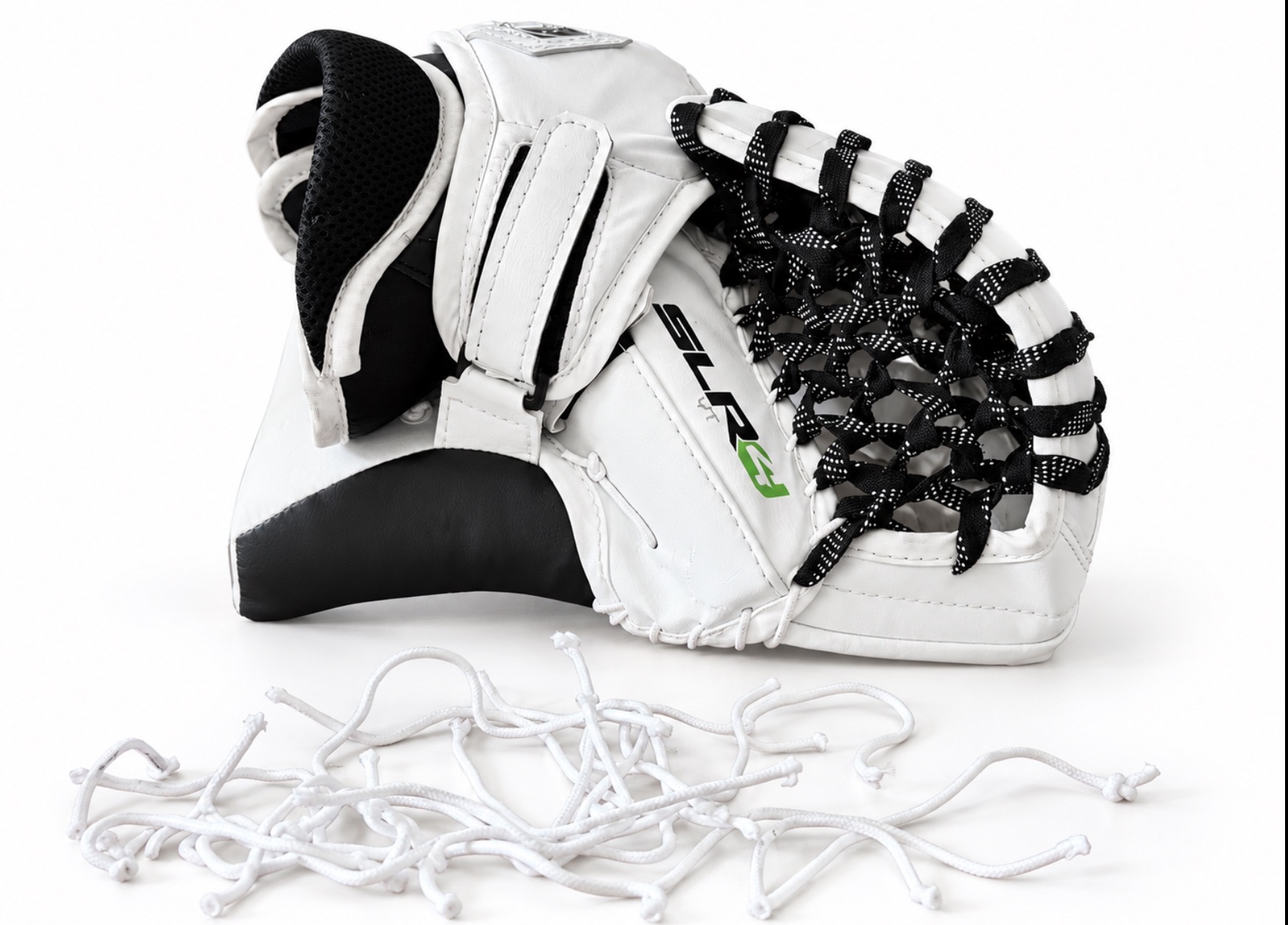
That eventually turned into understanding different breaks, palms, pockets, and construction methods.
590. 560. 600. Game ready palms. Practice palms. Pro palms. Different manufacturers. Different closure characteristics. Different goalies wanting completely different things from what might technically be the same glove.
Every glove has its own way of being worked. Every goalie has a different idea of what “right” feels like.
THE SLASH
Then Teddy took a hard slash to the hand.
He complained about it for the next couple of days, and as a parent that changes the way you look at equipment.
Now I was not only asking whether the glove closed properly. I was looking at protection. I was thinking about the construction, what was sitting between his hand and the next stick or impact, and whether there were better ways to prepare the equipment around the goalie wearing it.
That pushed me further into relacing, floating pieces, glove construction, and the way small changes can affect both feel and protection.
THE WORK ITSELF
Working on goalie gloves became part of my personality.
I can sit down with a glove and disappear into it. There is something satisfying about taking a glove somebody can barely close and gradually working it until it feels natural.
Sometimes somebody calls and asks if I can have a glove ready tomorrow. The answer is yes. I can turn a glove around quickly when somebody genuinely needs it.
Do I love doing it that way? Not really.
I like working on gloves passively. I will work on one, put it down, go to Teddy's hockey game, go to my daughter's dance, go to my daughter's cross country meet, hang out with my dogs, spend time with my wife, and come back to it.
I do not want to be a slave to one glove for eight or ten straight hours. But when a family needs something fast, I understand what that means because I am one of those hockey parents too.
THE GAP
Parents were buying great equipment, but there was still a missing service.
I started noticing where some of these gloves were coming from. Families were buying from some of the top hockey stores in the area, businesses with great histories and good people, but there was still not always someone focused specifically on goalie glove break-ins, goalie restringing, and helping parents understand what they had actually bought.
You buy the glove. Then what?
Who breaks it in? Who restrings it? Who helps you understand whether the glove is right for your kid? Who tells you when rebuilding an old glove makes sense and when you would be better off putting that money toward something different?
That is the space I became interested in. Not simply selling equipment. Understanding it.
LEARNING FROM PEOPLE WHO DO IT RIGHT
I have no problem saying where I learned.
A lot of my goalie glove break-in education came from watching The Goalie Glove Guy. I think he is awesome. He has thousands of followers on Instagram, his work is professional, and the quality is top-notch.
I watch his videos. I like them. I comment on them. I genuinely respect what he has built.
I do not think building a business requires pretending nobody else does something well. If someone is great at their craft, learn from them. Respect the work. Then figure out what your own version of the service should be.
For Hockey Detox, that has become broader equipment preparation and care.
WHY CERAMIC COATING?
Because goalie equipment is an investment.
Goalie gear is expensive. Pads, glove, blocker, chest protector, pants, helmet, skates, sticks. Families can have thousands of dollars tied up in one setup.
And kids grow.
Since last March, Teddy has had three sets of pads, three sets of gloves, two different helmets, and three pairs of skates. He is seven.
At some point I started asking a simple question: how do I take better care of the investment?
That is what pushed me toward ceramic coating.
Today ceramic treatment is a good piece of our business. We are doing somewhere around seven or eight sets of goalie gear a week. I wanted it affordable, I wanted good durability, and I wanted fast turnaround.
I can prep and ceramic coat a full set of gear relatively quickly, and because multiple pieces can cure at the same time we can often deliver equipment the same day.

WHAT CERAMIC COATING ACTUALLY DOES
It is protection, not magic.
Ceramic coating does not turn goalie equipment into a waterproof object. That is not what I am selling.
It is another layer of protection against the things goalie gear sees constantly: moisture, ice, snow, grime, puck marks, dirty rink floors, sweat, and water running down from a goalie dumping a bottle over their head or face.
Practice after practice. Game after game. Month after month.
The goal is to help reduce how much contamination sticks to compatible surfaces, make routine cleaning easier, and help the equipment stay in better condition over the long haul.
WHERE HOCKEY DETOX IS GOING
Education may be the most important part of the next chapter.
I did not know Hockey Detox was going to turn into this. I started because my son's gear smelled. Now I am fascinated by why one goalie chooses one pad over another, why one player loves a certain glove break, why another hates it, why one young goalie needs something softer, and why parents are spending thousands of dollars on gear without always understanding what that equipment is designed to do.
That is probably where Hockey Detox is heading next.
Education.
Why are parents buying certain equipment for their kids? Because somebody else wears it? Because it is the most expensive version? Because the word “pro” is attached to it?
A ten year old does not automatically need pro-level gear. They need equipment that fits, protects them, works for them, and that they can actually use.
Sometimes the best thing I can do for somebody is tell them not to spend money with me. Maybe the glove should not be rebuilt. Maybe it should be replaced. Maybe the glove is not right for the goalie in the first place.
I would rather have that conversation, because that is how trust gets built.
THE JOURNAL
This is becoming a place to talk about the gear honestly.
I was not sure anyone was going to care about these Journal entries. Then the last one had 1,137 people click the link to read it.
That got my attention.
So I am going to keep doing this.
I want the Hockey Detox Journal to become a place where hockey parents and goalies can actually learn about their equipment. What kind of goalie are you? What do you want your glove to feel like? What are you looking for from your pads? Do you love the old-school Brian's and Vaughn designs, or are you drawn to the cleaner modern look from brands like True and Bauer?
I want to learn what goalies want just as much as I want to share what I have learned.
Hockey Detox is not just about getting the smell out anymore.
It started there.
But like almost everything else I have done with this company, the next step started with my son.
NEXT
How to pick the right goalie glove.
The next Journal entry is going to get much more specific. We are going to talk about breaks, fit, closure, palms, protection, age, strength, and what a goalie actually needs from the glove on their hand.
Because before we talk about breaking in a glove, restringing it, or rebuilding it, we should probably start with the most important question:
Did you buy the right glove in the first place?