

008
THE COST OF BELONGINGTHE KID AT THE END OF THE BENCH.
At seven years old, I learned that a place on a roster and a place on a team are not necessarily the same thing. Thirty-five years later, I still question how often youth hockey mistakes one for the other.
The mornings at Phillips Academy
My introduction to travel hockey came in Andover, Massachusetts, when I was seven or eight years old. I was still learning to skate, and I wasn't close to being one of the stronger players. None of that bothered me much. At that age, hockey was something I looked forward to, not something I measured myself against.
I remember being moved to the C team rather than the D team because the adults thought my size could be useful. They were also candid about one thing: I shouldn't expect much playing time. It was an unusual arrangement for a beginner, although I didn't have the experience to question it. I had made a travel team. I assumed that meant I would be part of it.
Practices were at Phillips Academy, often at five or six in the morning. The old rink had two sides exposed to the weather, and on some mornings the temperature was in the teens. I remember the cold, the early rides, and the ordinary excitement of being on the ice with the rest of the team. I attended, listened, and worked like everyone else.
The distinction became obvious on game days.
Some nights I played seven minutes. Others, five. Sometimes it was closer to two. The precise numbers matter less than what they represented: while my teammates learned to read one another through regular shifts, I spent most of the game waiting for an opportunity that seldom came. I was there, but I didn't feel involved.
I NEVER REALLY FELT LIKE I BELONGED.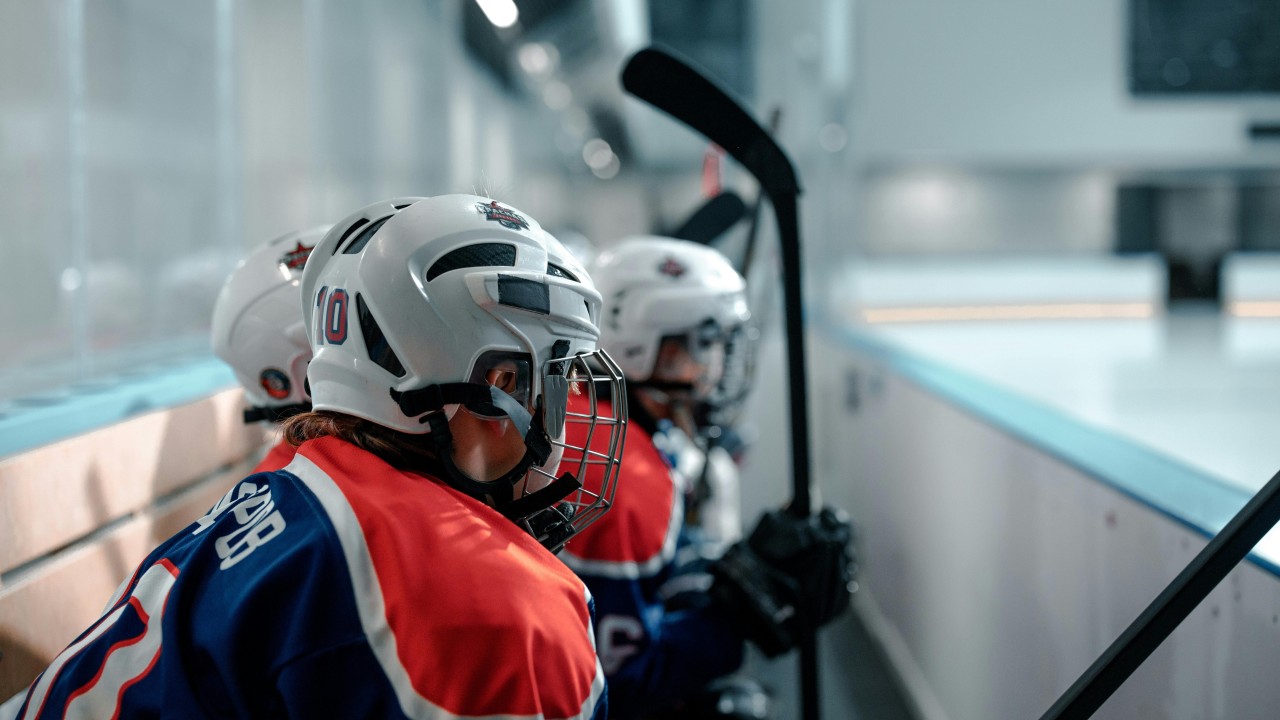
The mistake was visible. The reason wasn't.
Limited ice time didn't make me more composed when I finally got a shift. It often had the opposite effect. I tried to accomplish too much too quickly, played with unnecessary intensity, and made decisions I wouldn't have made if I were comfortable in the game. Every shift felt like an audition, because in my mind it was.
That is the part of player development we rarely discuss honestly. A child who doesn't feel trusted may struggle to play freely. Timing, confidence, decision-making, and chemistry are learned through repetition. When the repetitions disappear, the very qualities a coach wants to see can become harder for that child to demonstrate.
I wasn't owed a starting position, and I wasn't entitled to the same role as a stronger player. But there is a meaningful difference between teaching a young athlete that a role must be earned and placing that athlete in a situation with no realistic path to earning one.
I remember wishing I were on the D team.
It wasn't an objection to competition. I wanted to take a regular shift, make mistakes, and improve. The less prestigious placement might have given me more of what I actually needed at that age: the opportunity to play hockey.
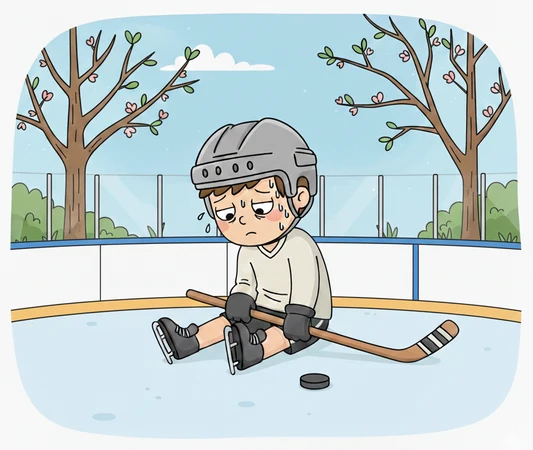
I improved. That isn't the whole story.
Over time, that experience became motivation. I didn't want to be selected because I was bigger than another child; I wanted to be selected because I could play. I spent more time working on my skating and skills, determined that the next coach would see something beyond my size.
I did get better. I also understand, looking back, that my response was only one possible outcome. It is tempting to call every difficult experience a character-building lesson when you happen to come through it successfully. That overlooks the children who don't.
Another player might interpret the same season as proof that he doesn't belong in competitive hockey. He may stop asking for the puck, stop taking risks, or eventually stop coming to the rink. Not every departure is caused by a coach, and not every disappointed player has been mistreated. But if a child loses interest in a sport he once loved, the adults running the program ought to examine the environment before dismissing his decision as a lack of commitment.

Then I met Kevin Grant.
Thank you, Kevin.
About two years after that first difficult season, a young volunteer coach entered the picture. Kevin Grant had no children in the program and no personal reason to invest in me beyond his interest in hockey and the players in front of him. That distinction means more to me now than it could have at the time.
Kevin could be blunt. He was demanding, occasionally a little rude, and certainly not concerned with making every conversation comfortable. He was also an excellent hockey player, and I paid attention to the way he carried himself on the ice. He had an energy that made me want to improve rather than retreat.
When my mother couldn't take me to a game, Kevin sometimes drove me. To an adult, that may sound like a small gesture. To a kid trying to find his place in the sport, it meant somebody was willing to make the extra effort. He was present when he didn't have to be.
I credit Kevin with making me a much better player. Just as important, he helped me develop confidence and a competitive attitude that followed me into other sports. He could demand more from me without making me feel that I had no value until I delivered it. That was the difference.
I never properly thanked him. I wish I had. What stays with me isn't a particular game or lesson; it's the influence of someone who understood that coaching is about the person developing inside the uniform, not merely the results printed beside a team's name.
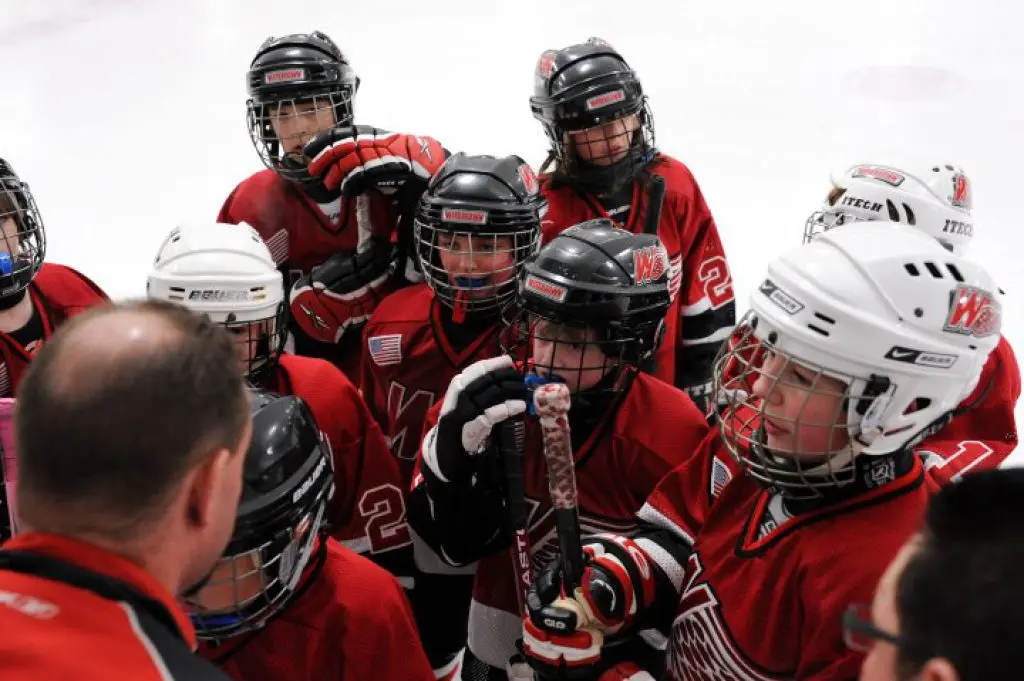
Demanding and destructive are not the same.
Years later, while attending a practice with my son, I watched a coach direct his anger toward his own child. It went well beyond a stern correction. The boy became visibly overwhelmed and began crying while the practice continued around him.
I don't know everything that preceded that moment, and I don't pretend to know what happens in that family's private life. I do know what I witnessed at the rink. It was uncomfortable, unnecessary, and difficult to reconcile with any reasonable understanding of youth development.
This was not someone operating on the fringes of the sport. The coach was involved with high-level tournament teams and carried himself as a person of considerable standing in the hockey community. That standing made the scene more troubling, not less. A reputation for winning should invite greater responsibility, not provide cover from scrutiny.
I'm not asking coaches to abandon standards, competition, discipline, or consequences. Kevin Grant was a demanding coach, and I'm grateful for it. What I reject is the assumption that embarrassment and fear are necessary tools of development. Correcting performance is a coach's job; attacking a child's sense of worth is not.
Correct the mistake. Do not make the child feel like the mistake.
Accountability cannot end at the bench.
This matters particularly in the competitive New England hockey environment my readers know, including the EHF and Elite 9. I am not suggesting that every organization tolerates poor coaching. Many do extraordinary work. But every program, regardless of its level or reputation, needs a process that can withstand an uncomfortable question about its own staff.
Families usually raise concerns through a coach or hockey director. Ownership may be several layers removed from the conversation, and legitimate problems can be filtered, softened, or never elevated at all. I understand why an organization needs a chain of command. I also believe a chain of command becomes a liability when it functions as a barrier to being heard.
The standard shouldn't change because a coach wins championships, brings in players, or has close relationships with senior staff. A credible complaint deserves a fair, timely review, an opportunity for the people involved to respond, and a clear route for escalation. Parents should not have to decide between speaking up and protecting their child's place on the team.
People often describe a protective inner circle as the boys' club. The phrase is crude but the concern is recognizable: relationships become more important than judgment. When the first instinct is to defend a familiar name instead of understanding what happened, trust begins to erode. Families notice. So do players.
There are coaches and directors who handle this responsibility extremely well. They are consistent, accessible, willing to acknowledge mistakes, and capable of holding talented people accountable. They deserve the same attention that struggling programs receive. The point is not to discredit good coaching; it is to insist that good coaching, and good governance, be the expectation.
If a concern is taken seriously only when it involves the wrong coach, the organization has a leadership problem—not a public-relations problem.
What are families actually paying for?
Youth hockey asks a great deal of families. Tuition, travel, early mornings, equipment, tournament weekends—the financial commitment is only part of it. Parents also place a considerable amount of trust in the adults who will spend hours each week shaping their child's experience.
Competitive teams have to make competitive decisions. I understand that not every player will receive the same ice time or play in the same situations. What I do expect is transparency: an honest assessment of where a player stands, what development opportunities exist, and what a family is actually signing up for before the season begins.
Parents have a responsibility here, too. We should ask harder questions about playing time, coaching philosophy, how complaints are handled, and whether our children are progressing as people as well as athletes. A prestigious league affiliation is not a substitute for those answers. Neither is a strong tournament schedule.
A healthy program can pursue championships without making a child's confidence expendable. In fact, that balance ought to be one of the clearest signs that an organization knows what it is doing.
The view changes. The responsibility doesn't.
Thirty-five years ago, I was the young player at the end of the bench. Today I watch hockey from the other side of the glass, as a father.
I remember the discomfort of feeling like I had been placed on a team without really becoming part of it. I also remember Kevin Grant, who arrived a couple of years later and gave me reason to believe there was much more I could become. Both experiences stayed with me. Only one is the kind I hope other children carry into adulthood.
Not every child who leaves hockey does so because of coaching. Interests change, circumstances change, and sometimes another sport becomes a better fit. But some children leave because the adults entrusted with their development have made the experience unnecessarily difficult. We should have the courage to distinguish those situations instead of treating every departure as the child's failure.
The responsibility isn't complicated: challenge them, teach them, and hold them accountable. Then hold ourselves to the same standard.