

YOUTH HOCKEY / EDITORIAL
WHEN THE
WHISTLE
LOOKS AWAY.
What the hell is happening to the standard of officiating in youth hockey?
When rules are enforced differently from one shift to the next, the game changes — and the children carry the consequences.
EFFORT / SAFETY / FAIRNESS / ACCOUNTABILITY

WHERE DID THE STANDARD GO?
I have spent the last six weeks watching youth hockey games and asking myself a question I never thought I would have to ask this often: where did the standard go?
Not the standard for the children. Not the standard for the coaches or the parents. The standard for the people wearing black and white, collecting a game fee, stepping onto the ice and accepting responsibility for what happens between the whistles.
I've watched goals awarded on plays where, from my vantage point, the goaltender already had the puck covered. I've watched dangerous contact go unaddressed. I've watched an arm go up after what appeared to be contact to the head, only for the official to lower it and wave the penalty away. And I've watched teams struggle to understand why the same behavior brings a whistle at one end and silence at the other.
These are my observations, not an audited accounting of every referee or every league. But what I have seen raises a question that is bigger than one bad game or one missed call. At what point does inconsistent officiating stop being an inconvenience and become a failure of the youth hockey experience?
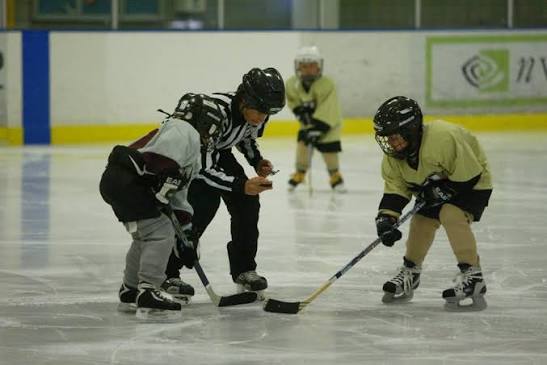
SHOW UP. KEEP UP. CARE.
Nobody expects an official to see every angle of every play. Hockey moves too quickly for that. A referee can be working hard, be in the right position and still miss a call. That's part of the sport.
But there is a difference between a mistake made while doing the job and a mistake born of not putting in the effort. When an official trails far behind the play, stops moving to find a better angle or appears uninterested in managing the game, parents and coaches can see it. So can the players.
Whether the assignment pays a little or a lot, it is still an assignment. The fee is not a promise of perfection. It is an agreement to prepare, hustle, know the rules and treat the game as if it matters — because it matters enormously to the children playing it.
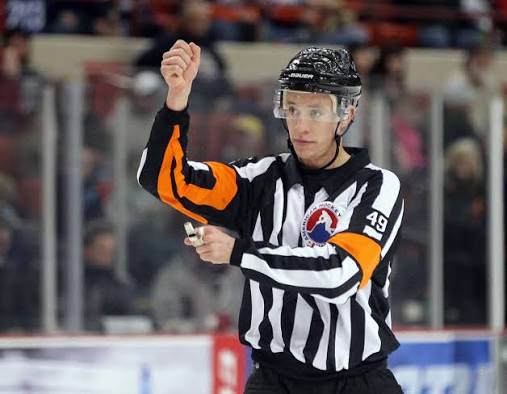
A MISSED CALL DOESN'T STAY SMALL.
Think about what happens when one team takes repeated penalties and the other team is allowed to commit comparable infractions without consequence. One side plays shorthanded. One side gets more chances. The rhythm changes. The bench changes. The players change how they compete.
The scoreboard does not record the whistle that should have blown. But a disputed goal, an uncalled dangerous play, or a string of uneven decisions can influence momentum and, sometimes, the final outcome. Games can be won and lost on moments shaped by the people assigned to control them.
That does not prove an official is favoring anyone. Intentional bias is a serious allegation, and not every uneven penalty total is unfair. But the appearance of a different standard for each bench is damaging all by itself. When families cannot understand what will be called from one shift to the next, trust starts to disappear.
THE MOST DANGEROUS CALL IS SOMETIMES NO CALL.
We should be far more concerned about an elbow to the head than a missed offside. We should be more concerned about a dangerous hit being ignored than an argument over a faceoff location. When dangerous contact goes unanswered, the lesson to the children is not subtle: the game may tolerate it.
Players notice what gets punished and what gets a pass. A match that is not controlled can become more physical, more frustrated and harder to manage. Coaches bear responsibility for their benches. Players bear responsibility for their conduct. But officials are empowered to stop illegal play in the moment.
There is no perfect way to prevent injury in hockey. There is, however, an obligation to recognize and enforce safety rules with attention and consistency. That obligation should never be treated as optional.

WHO IS WATCHING THE OFFICIALS?
We have systems for evaluating players. Coaches answer for their bench behavior. Parents are subject to conduct policies. Organizations receive discipline when they cross the line. So where is the equally visible process for improving officiating?
Who reviews assignments? Who watches game film when serious safety concerns are raised? Who identifies the official whose positioning is repeatedly poor, who needs mentorship at a certain level, or who cannot yet handle the speed and intensity of the game?
Accountability does not have to begin with a suspension. It can begin with an observer in the rink, film review, direct feedback, better pairing of experienced and inexperienced officials, and assignments matched to demonstrated readiness. A serious complaint process should recognize patterns, protect officials from harassment, and provide a response to the people who brought concerns forward.
Paying an official and assigning another game is not a development system. Leagues, assignors and governing bodies have a responsibility to make performance standards real.
PROTECT THE REFS WHO CARE.
Some of the people in stripes are teenagers learning a difficult job. Even experienced officials can face abuse from spectators and coaches. That is unacceptable. Nobody should have to absorb screaming, threats or personal attacks simply because they accepted an assignment.
Good officials deserve more than a crowd that only notices them when something goes wrong. They deserve training, protection, sensible scheduling, clear guidance and supervisors who help them improve. That support is not the opposite of accountability. It is the foundation of it.
If a young referee is sent into a game above their experience level without support, the system has failed that referee, too. We should be able to protect officials and demand better officiating at the same time.

THE GAME DESERVES BETTER.
I am not asking referees to guarantee a particular score. I am asking them to show up prepared, move with the game, call dangerous play, apply the same rules to both benches, and take the responsibility seriously.
I am asking leagues to show families how officials are trained, assessed and supported. Not with public shaming. Not with an invitation to argue every whistle. With actual standards that players, coaches, officials and families can believe in.
Parents must still control their behavior. Coaches must still lead. Players must still be responsible for their choices. But none of that excuses weak officiating, and the difficulty of the job does not erase the obligation to do it well.
These children are giving the game everything they have. The people responsible for protecting it should do the same.